
Does this flat need an air purifier? Compare the problem, CADR and filter cost
Define the actual pollutant and room, compare pollutant-specific cleaning performance and ongoing filter costs, and resolve property defects at source.
Name the problem before shopping for a machine
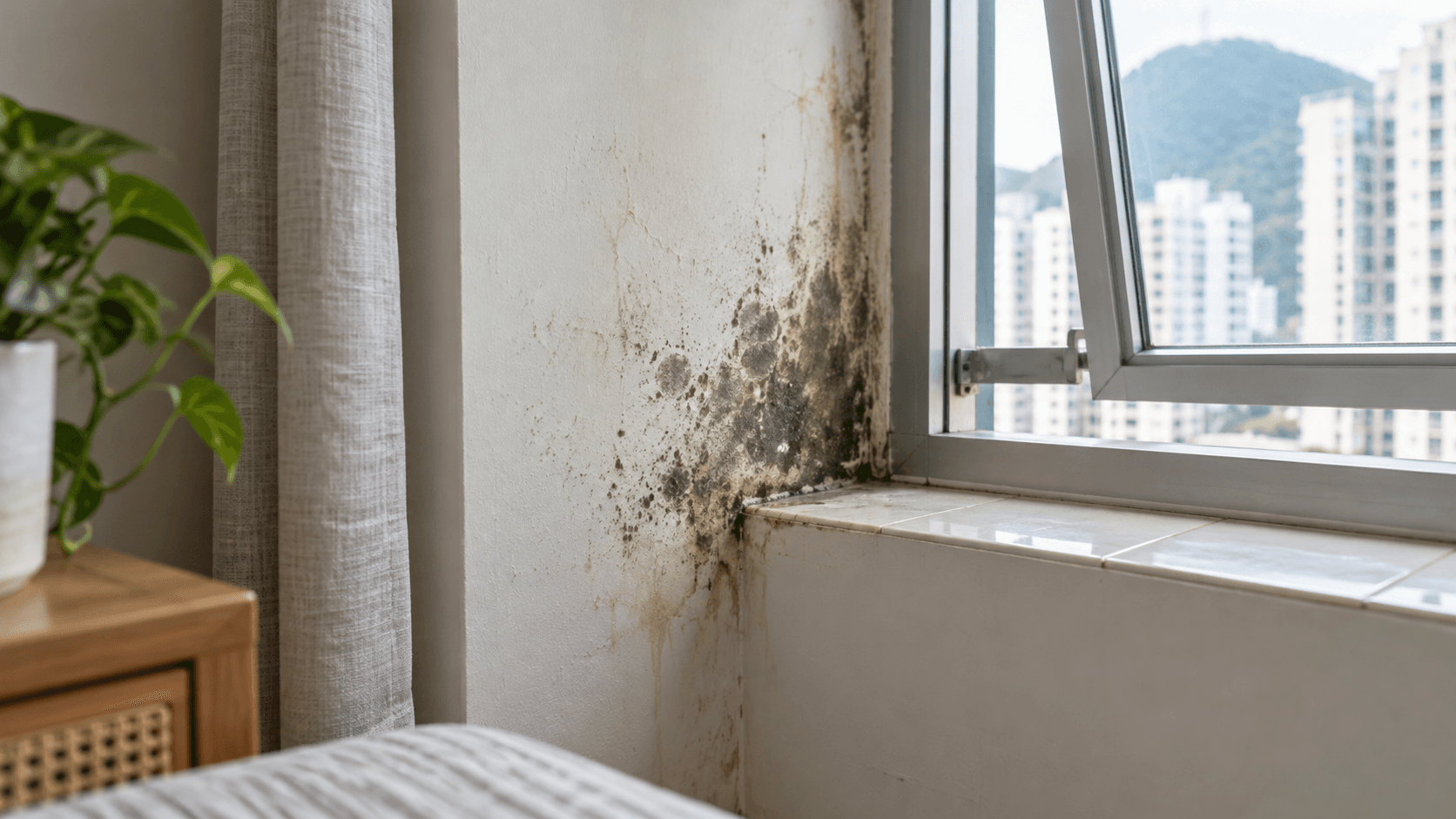
A portable air purifier is a tool for a defined room and pollutant, not a general cure for a flat that feels unhealthy. Start by writing down what triggers the purchase: outdoor particles entering a bedroom, dust resuspended during ordinary activity, a persistent cooking smell, or a damp stain. Note when it happens, which rooms are affected and whether the source can be removed. A particle filter may help with airborne particles that pass through it. It does not repair a water leak or remove the source of an odour simply because a display reports cleaner air.
The US Environmental Protection Agency's residential air cleaner review puts source control and ventilation with clean outdoor air first, then discusses air cleaners when those measures are insufficient or impractical. Treat that as a decision order. If a new flat has a visible mould patch, find and correct the moisture problem. If an appliance or renovation material emits a smell, investigate and manage that source. An air cleaner may be a useful addition for a remaining particle problem, but it should not become a reason to accept an unresolved defect at handover.
Distinguish particles from gases and odours
The pollutant matters because filters do different jobs. A particle filter is designed to capture airborne particulate matter such as some dust or smoke particles. Gaseous pollutants and odours require different media and are not automatically removed by a high particle rating. Even a machine with an additional gas filter should be assessed against its particular claim and maintenance schedule. Avoid assuming a broad phrase such as “purifies everything” has been independently proved for every pollutant in the home.
The Consumer Council's own tests found that models with similar advertised room-area claims could differ markedly in removal speed, and that results for smoke and formaldehyde could diverge. Those were tests of named products at that time, not a guarantee about today's stock. Use the finding to ask for pollutant-specific results and a test method. If the concern is a medical symptom, seek appropriate medical advice; buying a purifier should not be treated as a diagnosis or a promise to prevent infection.
Use CADR carefully and keep units visible
Clean Air Delivery Rate, or CADR, expresses how quickly a device delivers air cleaned of a specified pollutant under a stated test. The Consumer Council recommends CADR for comparison because sellers calculate “applicable room size” in different ways. Ask which pollutant the CADR describes, the unit used and the operating setting at which it was measured. A number for one pollutant must not be silently used as the performance number for another. Compare like with like, and keep the unit written beside each figure.
Do not assume that a manufacturer's claimed area is a promise for your whole flat. Doors, furnishings, airflow and the speed you can tolerate while sleeping affect practical use. A portable device principally serves the room in which it can circulate air. Place it where the intake and outlet are not blocked, following its manual, and check whether its noise at the relevant setting suits the room. If the machine can only reach a quoted rate at an intolerable fan speed, its headline number may be less useful in that household.
Budget the filter, electricity and usable life
Purchase price alone is a poor comparison. Record the exact replacement filter identifier, official replacement interval, local availability and replacement price for the model. A model whose filter is unavailable after a few years may leave a working motor with little value. The Consumer Council found a wide span in its test models' combined purchase and filter expenses over a long period; those historical figures are not current quotations. The lesson is to add the recurring filter line to the buying decision.
Make an illustrative budget without inventing a live offer. Suppose machine A costs HK$2,000 and uses a HK$400 filter each year. Over 3 years, purchase plus three planned filters totals HK$3,200, before electricity, repairs or price changes. Suppose machine B costs HK$2,500 and uses a HK$200 filter each year; the same simple total is HK$3,100. These are hypothetical figures chosen to show how a lower sticker price can be offset by consumables. Check whether the first filter is included, because that changes the actual schedule. A replacement reminder cannot replace the manufacturer's instructions or a look at the filter's real condition.
Check operation, placement and safety claims
Read the exact model's manual for clearance around the intake and exhaust, filter installation, cleaning and electrical supply. Keep the unit on a stable surface where people will not trip over its cord and where curtains do not block airflow. A machine pushed behind a sofa may be quiet because it is barely circulating the room's air. If the household plans to run it in a bedroom, ask to hear the fan setting that corresponds to the quoted performance, not only the lowest-speed demonstration in a shop.
Take extra care with a product sold on ionisation or ozone claims. The EPA explains that ionisers and some electronic cleaners can generate ozone, a lung irritant, while ozone generators intentionally produce it. A seller's promise that an “active” technology sterilises the entire room should be checked against the independent evidence and product instructions. Do not treat ozone as a desirable household cleaning feature. For an ordinary particle problem, compare the demonstrated particle-cleaning performance and maintenance first.
Use a worked flat comparison
Imagine a household comparing two rentals. Flat A faces a busy road, has no visible dampness and the occupants mainly want to reduce particles entering one bedroom. Flat B is quieter but has a recurring damp patch beside the window. At Flat A, a purifier might be evaluated for that bedroom after checking window sealing, ventilation options, room size, CADR and the filter budget. At Flat B, buying the same machine would not answer what feeds the damp patch or whether the landlord will repair it. This example does not claim that either flat is safe or that either machine will deliver a measured health result.
Write a decision sheet with columns for problem, likely source, evidence, corrective action, remaining airborne concern and device specification. For Flat B, the repair and a dry, inspectable handover are the immediate housing questions. For Flat A, the question may become which device can run at a tolerable speed and cost in the room where people sleep. The table stops an attractive appliance purchase from hiding a building defect and stops a vague “air quality” worry from becoming an unsupported product claim.
Keep ventilation and maintenance in the plan
Filtration and fresh-air exchange serve different purposes. A purifier recirculates room air through its filter; it does not itself supply outdoor air. The EPA review treats clean-air ventilation and source control as core measures. In Hong Kong, outdoor conditions, traffic exposure, weather and the flat's actual openings affect when and how residents ventilate. Plan around those actual conditions, and do not seal a room permanently in the belief that a filter replaces all ventilation needs. Where mechanical ventilation is installed, check that it works and is maintained.
Once a machine is bought, record its model, filter code, purchase date and replacement instructions. Clean the prefilter if the manufacturer instructs, replace rather than merely vacuum a filter that the manufacturer says to replace, and keep the air path unobstructed. Reassess the original problem if symptoms or visible dirt persist. An odour that returns immediately after switching off the machine, new staining or new water marks deserves another source investigation rather than simply turning the fan up.
Decide whether to buy, repair or gather evidence
Before paying, ask: what pollutant is the machine supposed to address, what evidence supports that need, what is the pollutant-specific CADR, what does the replacement filter cost, and where will the machine run? If those questions have answers and the remaining problem is airborne particles in a defined room, compare exact models on the same criteria. If the problem is water, a gas leak, a persistent chemical source or an uninvestigated odour, pursue the relevant repair or safety route first. An air purifier should not be written into a tenancy as a substitute for a habitable handover.
For a home search, record visible conditions with dates and ask the owner or agent for a specific investigation of any defect. Keep product choices separate from the property file: one is a household purchase, the other is evidence about the flat. When comparing homes, include the realistic filter and running budget only if a device is actually part of the intended routine. That gives the family a defensible decision without pretending that a laboratory test of a past product predicts the air in a particular flat today.
