
Window water at a flat viewing: condensation or rain seepage?
Water beside a window can have several sources. Compare location, timing and weather, then require an investigation and repair record suited to the actual cause.
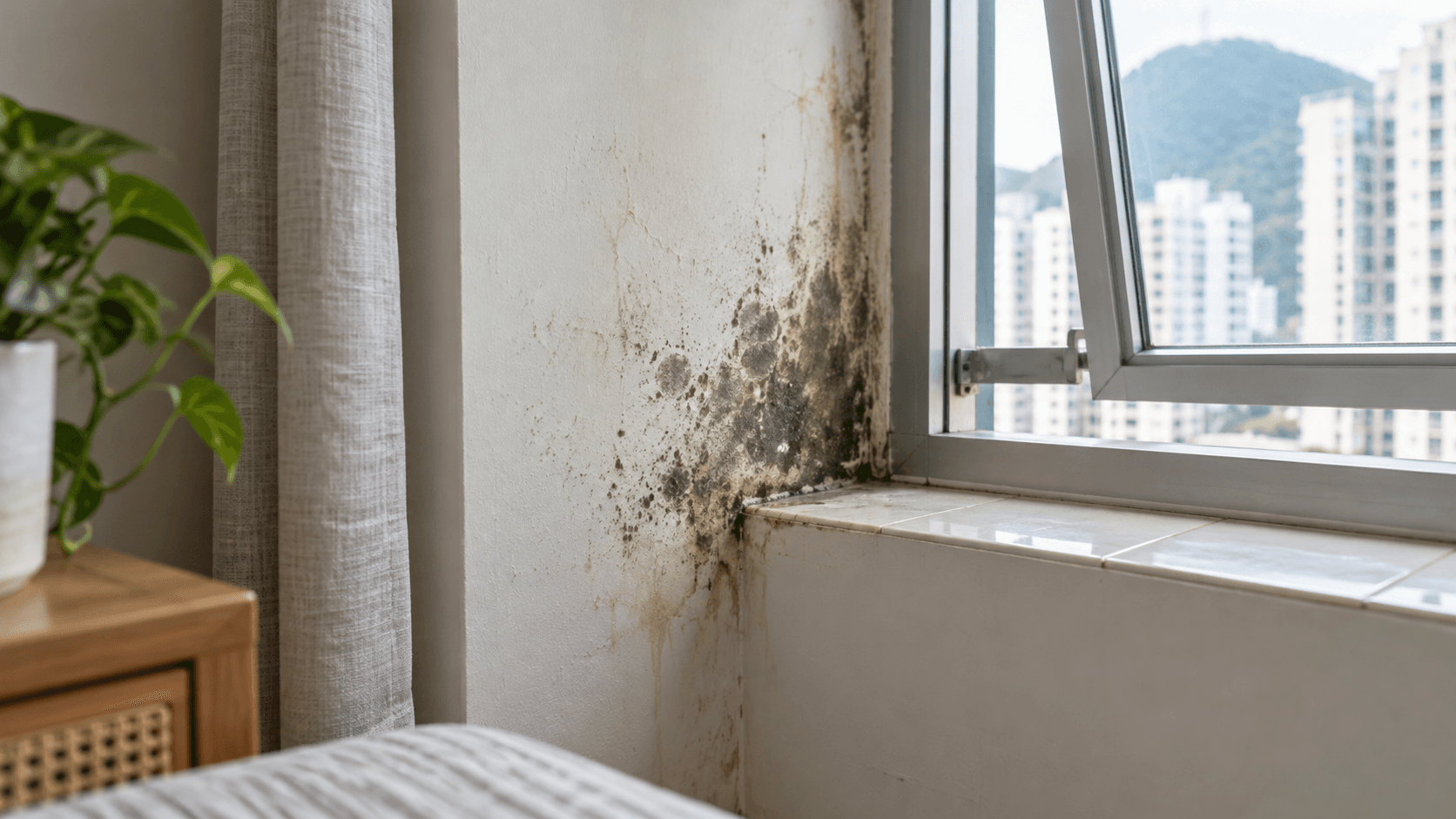
Decide whether the water is forming indoors or arriving from outside
Water on the glazing, frame or adjacent wall at a viewing is a question, not a diagnosis. The Indoor Air Quality Information Centre explains that warm humid air can condense on cold surfaces, including when humid air enters immediately after air conditioning stops. The Buildings Department identifies other routes for water near windows: frame filling, gaskets, sealants, external walls and rain penetration. The responses differ. Observe when the water appears, exactly where it starts, the weather, air conditioner use and whether the mark recurs before deciding whom to ask to investigate.
A single dry-weather viewing cannot exclude rain penetration. Equally, a wet wall after a storm should not make you ignore indoor humidity or cooling conditions. Describe the evidence precisely: droplets on the room-facing glass, staining below one corner of the sill, or a patch that darkens after wind-driven rain. Photograph both a room-wide view and a close-up of the edge of the mark, and date the observation. Wiping the glass or painting the wall can remove visible evidence without establishing why it became wet.
Use location and timing as clues, never as a verdict
Condensation is more plausible where beads form on the inside face of glass or another cold surface in step with humid room conditions and recur after wiping under similar conditions. Penetration becomes more plausible around the frame, below the sill or along a wall joint after wind and rain. The Buildings Department's maintenance guide lists deformed frames and sashes, defective gaskets and sealants, poor frame filling, and air conditioning platforms tilting inward among possible window-related routes. A visible pattern cannot prove one source, and both mechanisms can occur in the same home.
Ask when the occupier first noticed it, whether one wind direction matters, whether it occurs without air conditioning and whether furniture nearby has been damaged. Read any repair invoice for the exact window, date, work and subsequent test. A generic external painting receipt does not certify that a frame joint no longer admits rain. A spreading damp patch, bubbling paint or persistent musty area deserves investigation rather than a diagnosis by touch. Record what the seller or landlord says as a claim separate from your own observation.
Make a safe, limited viewing inspection
Look at the indoor glass, lower frame, sill, wall below and the back of nearby furniture. Ask if the air conditioner has just been switched off and whether a window was then opened. Ask management whether flats on the same elevation have reported similar rain entry. If a mould patch is present, avoid touching it, especially with children or susceptible household members. A visitor should not spray the outside of a window, stand on a sill or reach over an external wall. A proper water test or building survey needs a suitable method, permission and someone qualified to interpret it.
If water is near a socket, fixed wiring or an appliance, stop using the affected equipment and seek qualified help. The presence of wipeable droplets does not mean the adjacent timber or paint has escaped damage from repeated wetting. The IAQ Information Centre advises keeping places dry, cleaning mould and correcting leaks promptly. Cleaning a mark is a separate task from establishing its moisture source. If a wall has been freshly repainted, ask whether the original damp area was investigated and for the work record before treating the cosmetic surface as proof of a cure.
Use humidity control as a test, not a promise against leaks
Where the first evidence points to condensation, ask the occupier to note indoor relative humidity, cooling use and when the glass becomes wet. The IAQ home leaflet advises keeping indoor relative humidity below 70% if possible and avoiding the sudden arrival of hot humid air at a cold surface after switching off air conditioning. This is practical advice for reducing condensation and mould risk, not a statutory pass mark for a flat. A reading below 70% does not guarantee that every cold surface stays dry. Ventilation should account for the outdoor conditions and the room's use rather than mean opening every window at every moment.
Cooking and shower moisture should be exhausted outdoors where the installed system permits, and cooling and exhaust equipment should be maintained according to its design. If one fixed patch remains wet after changes in use, or a new stain appears following rain, reopen the possibility of penetration. A dehumidifier removes moisture from indoor air; it does not restore a failed frame seal, a cracked external surface or a leaking pipe. Relying on one continuously before investigating the source may hide the symptom while finishes continue to deteriorate.
If seepage remains plausible, identify the part and investigator
The Buildings Department lists defective supply and drainage pipes, waterproofing and rain entry through roofs, balconies, external walls and windows as common seepage routes. A patch beside a window therefore need not originate in the window itself. An owner can engage an appropriate building technician or licensed plumber to investigate, according to the suspected source. Building management or the owners' corporation should be involved where common fabric may be implicated; if a neighbouring unit may be involved, cooperative access matters. Ask for the area being examined rather than demanding a preferred repair before the source is known.
The Joint Office has a defined public health role. The Buildings Department says rainwater through roofs, external walls or windows will not normally be a nuisance actionable by that office under its public health procedure. An unresolved neighbour-related seepage complaint may be taken through the official route, but lodging a report is not evidence that a transaction defect has been identified or repaired. A buyer or renter still needs the condition, inspection and handover position documented. This distinction matters when an agent says the government has been informed as if that settles who will fix the flat.
Compare two window-side situations
In Flat A, droplets appear on the room-facing glass soon after the cooling stops and the window opens; the sill, wall and timber remain dry. Several observations under similar conditions support trying a change in use and checking for a persistent mould problem. In Flat B, paint below the sill blisters after heavy rain, there is an older patch of repainting and management has a report from the same facade. The next step is an appropriate investigation of frame and external wall, followed by a specific repair and a rain-condition review. Neither example is a definitive diagnostic formula.
Flat A could have a separate leak, and Flat B could also experience condensation. The question is how each clue changes what you require before committing. A retest only on a dry day does not establish that a rain entry route is closed. If a tenant's move date is close, record whether the room is usable, when any mould cleanup and repair will occur, how access will work and whether handover may need to shift. A broad promise that the window will not leak is less useful than a named cause, work scope and checkable acceptance condition.
Accept a repair only when it addresses the original question
The report should state the suspected source, inspection method and limits, exact repair area, completion date and conditions for follow-up. Frame sealing, external wall repair and plumbing work are different jobs. If condensation is the explanation, record the relevant use conditions and whether droplets and mould recur after a practical humidity change. If rain entry was found, examine the same location after suitable rain or a properly designed professional test. Keep before-and-after photos at handover. New paint alone does not establish that a wet substrate is dry or a joint is sound.
When comparing homes on Houseline, label a window issue as investigated with a documented result, awaiting a rain-condition retest, or still unexplained. An allowance in price for an unknown water source transfers uncertainty to you. That may be a decision you consciously make, but it should follow an understanding of the missing investigation, likely repair scope and handover terms. A clean-looking surface on viewing day should not silently erase the record of a recurring patch.
