
Mould at home: control the moisture, then clean and ventilate
When mould appears, look for leaks or trapped moisture, keep the area dry and improve ventilation. Then clean or discard affected material as appropriate. Covering the stain without addressing dampness leaves the cause in place.
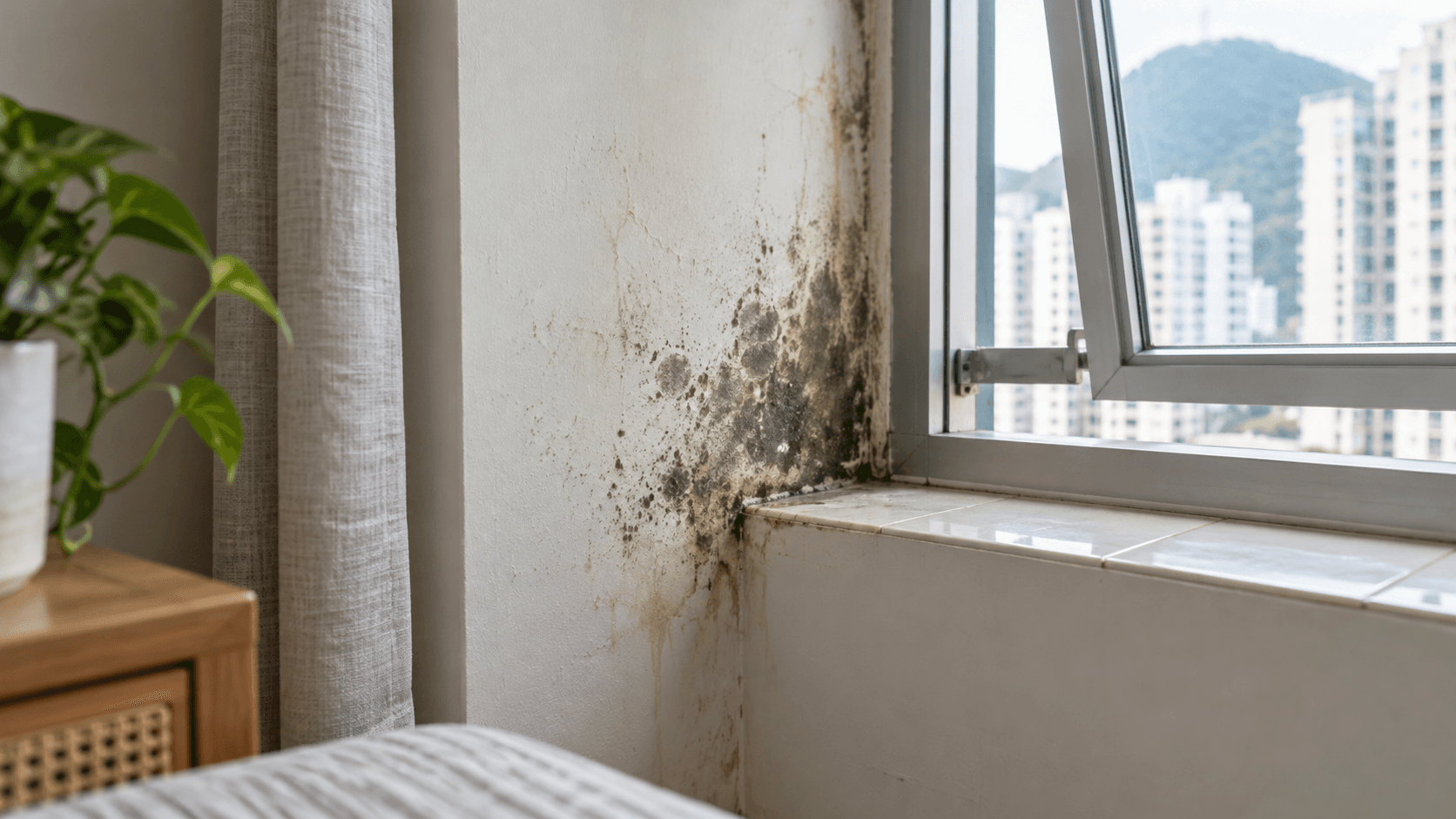
Trace the water before treating the mark
If mould appears at a wall corner, window, ceiling or behind a cabinet, note its location and extent. Look for water marks, odour, a leaking pipe, rain entering around a window, a dripping air conditioner or water left in a bathroom. Dampness can also build up where air rarely circulates. These are clues; the appearance of a patch alone cannot establish the source of a leak or who must repair it.
Hong Kong's Indoor Air Quality Information Centre says the most effective prevention is to keep rooms dry and control dust. It advises prompt repair of leakage or seepage and cleaning mould when found. If water is still entering, arrange to identify and repair its source. Washing or painting over a mark will not resolve that cause. A tenant can send dated photographs and the affected locations to the landlord or building management and ask how investigation and repair will be arranged.
Dry the area and restore airflow
While the water source is being addressed, remove standing water and dry nearby objects. Avoid leaving damp clothes or wet cardboard in the affected corner. Open windows for fresh air when practicable, use kitchen and bathroom exhaust fans to carry moisture away, and keep vents clear. If air conditioning is used, clean its filters and pay attention to the fresh air supply. Choose a safe ventilation arrangement when weather or outside conditions make opening windows unsuitable.
The Centre identifies source control and adequate ventilation as the keys to better indoor air quality and notes that humidity encourages biological pollutants such as fungi. An air cleaner may assist, but cannot replace leak repair, cleaning and airflow. Revisit the cleaned location and note whether a patch returns after rain, a shower or air conditioner use. That timing can help direct the next inspection. Quick regrowth is a reason to investigate moisture again rather than repeatedly hide the stain.
Choose cleanup by material, with protection
For cleanup, the Centre advises a disposable mask, rubber gloves and safety goggles, followed by handwashing. Keep people with asthma or allergies away from the work area when necessary. Avoid dry brushing or other actions that spread mouldy dust. A hard, nonporous surface can be washed with detergent and water and then dried thoroughly. The Centre does not recommend biocides or disinfectants as a general mould treatment because of their potential toxic effects.
Absorbent material such as a ceiling tile or carpet may have to be discarded if it cannot be cleaned. The Centre advises sealing it in a plastic bag, cleaning the outside, then placing it in a second bag for disposal. Control dust when removing mouldy wallpaper. If the area is difficult to clean, building material must be removed, or the source of moisture remains unclear, seek a competent professional’s advice about cleanup and repair. In a rented home, confirm who can authorise removal or repair before work starts.
