
Office central air conditioning: verify hours and extra charges before leasing
For a fitted office, confirm exactly which rooms receive central cooling, when it runs, how after-hours service is ordered and billed, and who repairs each part of the system.
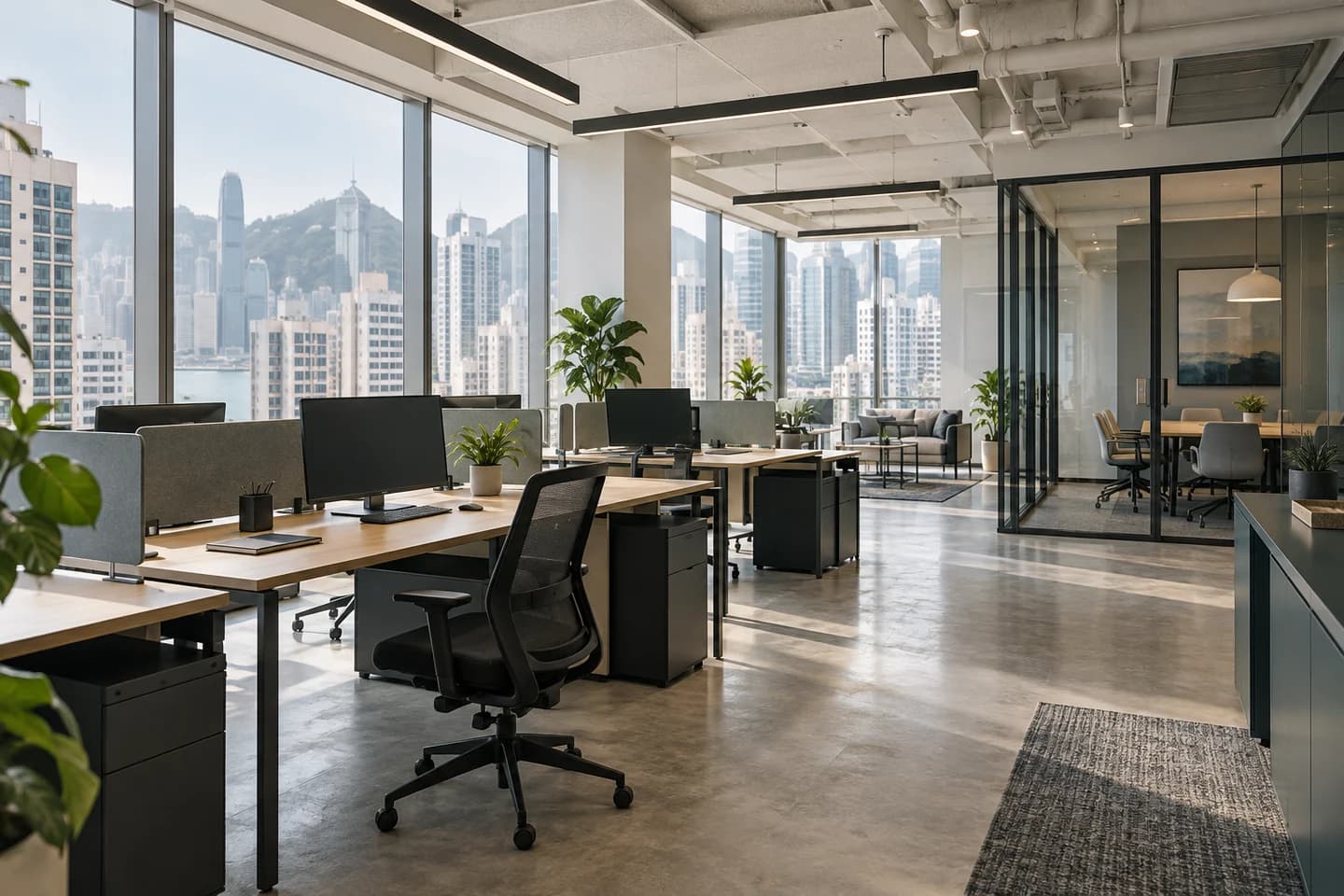
Identify the cooling service behind the fitted space
Ceiling vents in a fitted office do not prove that a tenant can start cooling whenever staff arrive. Map each room to its actual system: building central air conditioning, a tenant-controlled split unit, supplemental cooling or equipment dedicated to a particular room. Ask the management office for the normal hours that apply to this floor on weekdays, weekends and public holidays. Check whether the incoming tenant may request extra service directly, whether that permission belongs to the landlord, and whether the arrangement changes on a building holiday. A brochure or another tenant’s description is a lead, not a binding schedule for the exact unit.
Walk the office with the intended work pattern in mind. Try the meeting room, the most distant desk and any room holding heat-producing equipment during ordinary occupancy hours. If the team regularly works at night or on weekends, request a second visit during that window. Record whether central cooling is actually operating or the room feels comfortable because of a separate appliance. A brief empty-unit viewing does not model a full team, sunlight and equipment heat, but it can expose the question that must be resolved before signing.
Do not read statutory energy paperwork as an hours guarantee
The Electrical and Mechanical Services Department says that the Buildings Energy Efficiency Ordinance does not govern day-to-day operation and settings, giving air conditioning temperature as an example. An energy form or building efficiency claim therefore cannot tell a prospective tenant that cooling will be available during a late client meeting. EMSD energy guidance recommends operating equipment according to building hours and maintaining air conditioning systems; that guidance describes sensible management, not the promised service for a particular lease. Obtain the actual building timetable and tenant terms from management.
A building energy audit can be useful context about central services, yet its energy use index is not a forecast of the cooling available to a specific office. EMSD notes that buildings differ in central installation coverage, operating mode and hours, making direct comparisons of that index problematic. Keep the regulatory, management and contractual questions separate: does the installation meet applicable requirements, when does this building operate it, and what does the landlord promise the tenant? A positive answer to one does not silently answer the others.
Make after-hours cooling a usable arrangement
For a team with evening calls or weekend events, ask more than “Is overtime air conditioning available?” Find the request form, lead time, minimum bookable period, permitted days, charging unit, any whole-floor or zone charge, cancellation rule and person authorized to order it. Request the current management price schedule and confirm whether the tenant or landlord pays the invoice. These details are building-specific; do not take a price from a neighbouring office or assume that the amount is included in rent. Ask how an urgent unplanned meeting is handled when the booking deadline has passed.
Check access on the same clock. After-hours cooling does little good if the relevant lift, entry gate, reception or washrooms are unavailable. Record whether independent room coolers can be used safely and with permission when the central system is off, but do not assume that a socket or visible unit grants installation rights. The decision turns on the full work session, from entry to ventilation to departure. If the after-hours arrangement cannot be documented, put it into the unresolved column rather than treating an optimistic verbal answer as a service commitment.
Compare total occupancy cost with explicit assumptions
Consider two hypothetical offices. A costs HK$30,000 a month and includes central cooling during ordinary weekday office hours, with a separate charge for evening meetings. B costs HK$32,000 a month and has tenant-controlled equipment, but the tenant must arrange its maintenance. These amounts are invented solely to show a comparison method; they are not current rental offers. A team working across time zones should estimate how many late sessions it needs, obtain the actual minimum charge for A, and identify maintenance obligations for B. Unknown prices should remain marked as unknown, never entered as zero.
Place management fees, electricity, security access, installation works and restoration costs alongside rent. The Estate Agents Authority advises that tenancy terms should state whether rent includes items such as management fees, rates, Government rent and utilities. An office tenant should go further and ask specifically where normal central cooling and extra hours appear in the landlord and management bills. Two offices with the same quoted rent can produce different operational costs if one requires frequent whole-zone cooling. Ask for an example invoice if the charging rule is difficult to understand.
Allocate faults between building and unit equipment
A warm room can reflect a building plant problem, a terminal fan, controller, blocked filter, ductwork or a changed partition layout. A viewing is not a technical diagnosis. Request an equipment schedule and any outstanding maintenance or complaint record, and identify who may call the building engineer. Ask which party pays for the central system, tenant-side components, supplied room units and filters. The Community Legal Information Centre explains that tenancy maintenance duties largely depend on the contract; labels such as “internal” and “structural” can be too vague for a specific fault.
If a former tenant installed supplemental cooling, verify that the landlord owns or is entitled to deliver it, that it is included in the handover, and that the maintenance obligation is written down. Separate a defect known before occupation from routine upkeep during the tenancy. Define the reporting route and response process when cooling fails during a booked overtime period. A statement that the “building handles it” is only useful if the exact component and contact are identified; otherwise landlord, tenant and management may each believe the problem belongs to somebody else.
Test the unit without pretending to certify it
During a site visit, note whether the central system is on, which rooms are occupied, where controls sit, whether airflow and temperature feel uneven, and whether there are smells or unusual noise. Photograph the visible control and vent positions and date the answers received from management. Do not open ceiling panels or dismantle equipment yourself. Ask an authorized person to arrange a technician if a defect matters to the leasing decision. An empty-office test cannot establish performance under maximum occupancy, but it can support a condition that a known issue must be checked before handover.
Test the surrounding office use too: lift access, lighting, washrooms, ventilation and security procedures at the hours when people will actually be there. A newly fitted meeting room may be attractive during an afternoon visit while being unusable for recurring late calls. Conversely, a team working almost entirely within normal hours may not need to pay for an independently controlled system. The point of the test is to match the real schedule and room pattern, not to award a generic score to central air conditioning.
Record the starting equipment and the exit obligation
Add to the lease schedule the cooling equipment actually supplied, its known condition, any outstanding repairs, ordinary hours, overtime request method and who bears each recurring charge. Ask how the tenant will receive updates if building management changes its operating timetable. A management office’s current oral timetable should not be presented as an immutable promise unless the lease gives the tenant a clear contractual right. If the tenant plans to install supplementary cooling, obtain the necessary owner and management permissions and have a qualified person assess electrical load, drainage, exterior works and maintenance access.
The exit matters as well. Decide whether tenant-installed units stay, are removed, or require reinstatement of ceiling, electrical and ductwork at the end of the term. Separate those obligations from responsibility for a unit that the landlord supplied at the start. CLIC’s contract-based maintenance guidance makes a specific written allocation more useful than a vague promise to keep the premises “in good condition.” The starting condition and exit condition should be recorded together so the fix for a cooling shortfall does not become an unexpected removal bill.
Make a decision around the actual team
A small design team mostly present on weekday afternoons may find central cooling satisfactory if management documents a workable way to buy occasional evening hours. Another team running weekly weekend sessions may need independent cooling, provided its power, ventilation and repair permissions can be verified. Neither can choose responsibly from the rent alone. The practical difference is whether essential work can run reliably at a known total cost and whether a fault has a clear response path. A concession on rent does not create cooling service on days when the building does not offer it.
When comparing Houseline commercial listings, take the same question sheet to each viewing: rooms served, ordinary hours, overtime booking and charges, sample bills, open defects, repair authority, weekend access, permission for added equipment and exit obligations. Mark unsupported answers as pending. If a required working period cannot be confirmed, either get an enforceable written arrangement before signing or choose a space whose actual system fits the schedule.