
Car damaged in a residential car park: record, report and resolve it
Check safety first, preserve the scene and camera evidence, notify the right parties and compare repair or claim routes against the actual policy.
Make the scene safe and identify what happened
A scrape found in a residential car park is a different problem from a collision witnessed while driving. First check for anyone injured, a vehicle leaking fluid, a blocked exit or damage to a pillar, gate or other property. Seek immediate help where safety requires it. If the vehicles can remain safely in place briefly, record their positions before they are moved; never block an emergency route just to preserve a photograph. The Hong Kong Police traffic-accident guide asks drivers to stop and check injury and damage, take scene and vehicle photographs when safe, and move vehicles out of obstruction afterward.
If the damage was discovered after parking and no other party is present, do not invent a time or collision account. Record when the vehicle was last seen undamaged, when the damage was found, the bay number, nearby marks and any plausible camera position. Tell management that you are reporting observed damage, not asserting who caused it. If the vehicle cannot be driven safely, arrange recovery or professional assessment before using it. The first record should separate what you saw from what you infer.
Photograph a complete, useful record
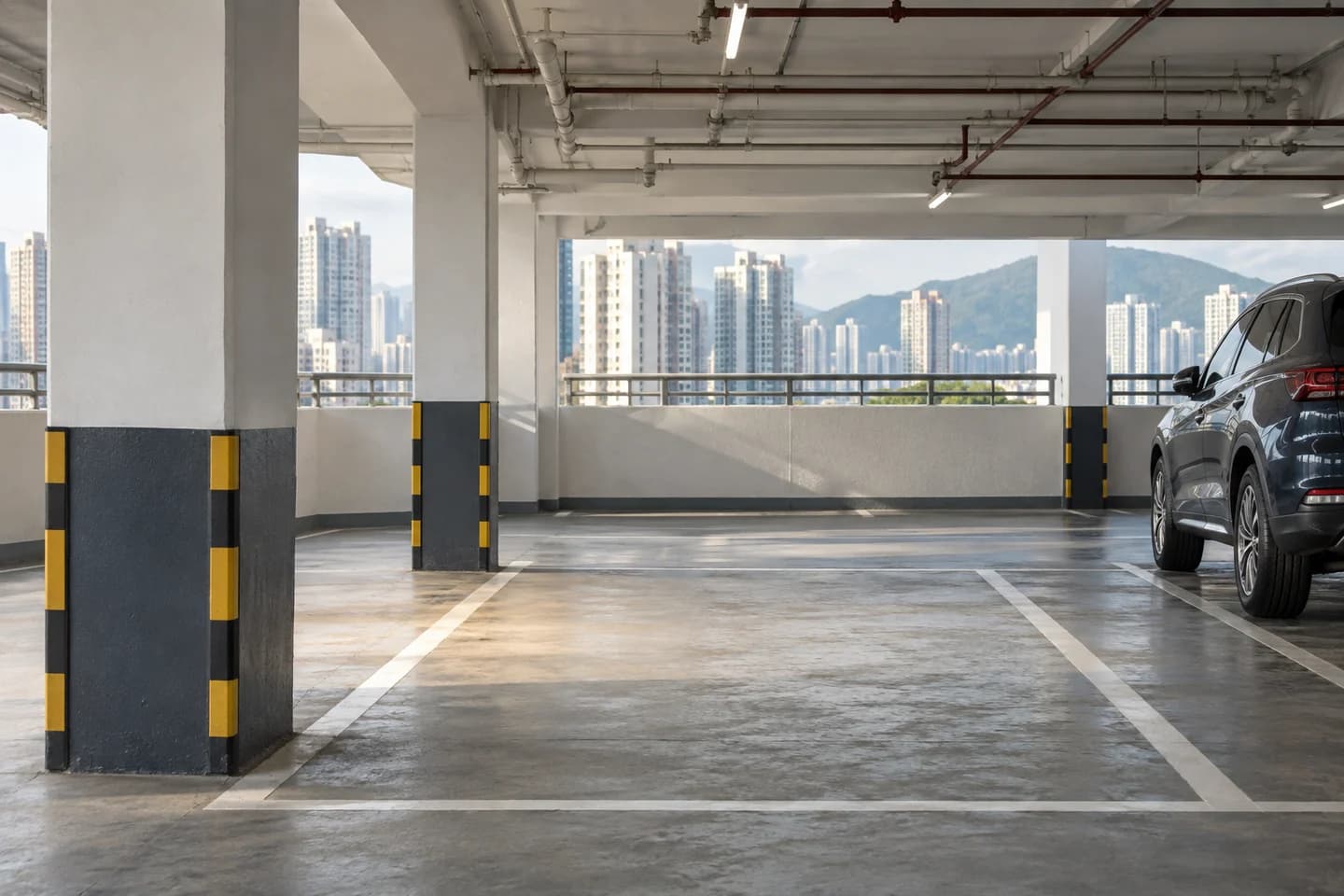
Take wide views showing the bay, pillar, driving aisle, vehicle positions and any debris or tyre marks, then closer views of each damaged area. Capture the registration marks if the other driver is present, but do so without confrontation or unsafe manoeuvres. Keep the original files with their timestamps and note if you later move the car. A close-up of a dent alone may not establish where an impact occurred. Save dashcam footage before it overwrites, and write down names of willing witnesses and how they can be contacted.
Where another vehicle, barrier or building fixture is damaged, ask management to inspect and record that separate loss. A car owner's motor policy and a building manager's maintenance records answer different questions. Do not sign a statement accepting fault based only on a quick glance at the scene. Exchange the information requested by the Police guide where applicable, and give accurate facts to police and insurers. If accounts differ, keep both versions identified rather than editing the original note to make the story look certain.
Use the police guidance without overstating a car-park rule
The Police guide says to report as soon as reasonably practicable and no later than 24 hours when parties did not exchange personal contacts, anyone was injured, or government or People's Liberation Army property was involved. It also says a damage-only accident need not be reported to Police where the relevant drivers or property owners stop and exchange the specified details. That is the Police's general traffic-accident guidance; the facts and legal status of a particular private car park can matter. If unsure how it applies, contact Police promptly rather than deciding from a car-park sign alone.
The Insurance Authority's consumer advice is more cautious operationally: it urges reporting an accident to Police and the insurer immediately, even if minor. These statements serve different purposes. One describes circumstances in the Police guide that require a report; the other advises what protects a motor-insurance position. Follow your actual policy's notification clause and seek advice if reporting duties are unclear. A management security log is useful evidence, but it is not automatically a Police report or an insurance notice.
Ask management to preserve evidence, not to assign blame
Give management the bay and aisle, the best known time window, vehicle details and a concise description of observed damage. Ask whether a camera covers the area and request prompt preservation of relevant footage before normal retention deletes it. Ask for the incident reference and who will respond. Management may need to check its own record of barrier operation, cleaning, maintenance or a damaged common fixture. None of this proves the building caused the loss; it keeps the evidence available for the appropriate investigation.
Do not assume an occupier can demand an unedited copy of all car-park footage. The Privacy Commissioner explains that CCTV images can involve personal data and that disclosure to third parties is subject to purpose and privacy rules. Ask management how it will handle a preservation request, a Police enquiry or a formal data-access request, and supply a narrow time and place. Avoid posting other drivers' faces, plates or video online to seek blame. A preservation request and a right to receive footage are different matters.
Read the policy before choosing a repair route
Notify the motor insurer with the facts and ask about its reporting form, approved repair process, excess and possible effect on the no-claim discount. Third-party-only cover and comprehensive cover do not pay for the same losses. The Insurance Authority explains that motor policies commonly contain an excess and that claim payments consider age, depreciation and market value. Do not assume that a management fee or a security guard means damage in the car park is automatically insured by the building. Ask for the actual policies and applicable clauses before relying on any cover.
A private settlement or a repair paid directly may look faster, but first ask the insurer what notice is required even if no claim is ultimately made. Obtain an itemised repair assessment and avoid committing to a final amount while hidden damage is unknown. If another party offers payment, record the scope, timing and what happens if repair reveals more damage. Keep towing, inspection and transport receipts. The useful choice is between routes with known costs and duties, not between a vague promise and an assumed insurance payout.
Work through two plausible car-park incidents
Suppose a driver reverses into another car while both owners are present. The drivers stop, check for injury and other property damage, photograph the positions safely, exchange the details described by Police, and move cars from the aisle when safe. They notify their insurers and ask management to preserve footage if the contact point is disputed. If a pillar was hit too, management records that separate damage. No one should treat an immediate verbal agreement as proof that every repair cost is known.
Now suppose a resident returns to a parked vehicle and finds a fresh scrape with no driver in sight. The resident can document the discovery, ask management to preserve the relevant camera window, save their dashcam clip, contact insurer and seek Police guidance if identity or reporting status is unclear. The second scenario cannot honestly name a responsible driver from the scrape alone. In both cases, the evidence file should keep observation, time, contacts and later findings separate. This makes it easier to correct a mistaken first impression without concealing the change.
Close the case with a traceable handover
Keep a single incident folder with photographs, original videos, management reference, Police reference if any, insurer correspondence, repair assessment, invoices and final settlement. Check that the vehicle is roadworthy before driving away after repair; ask the repairer to explain work done and any unresolved issue. If a building fixture was damaged, confirm management has a separate repair record and that any claim made against you is itemised. A case is not closed merely because a guard wrote it in the logbook.
For a future parking-space purchase or rental, the incident also raises a property question: how do residents reach management, where do they report a blocked aisle, and what camera coverage actually exists? Houseline can help compare parking spaces, but it cannot promise a particular bay is free of accident risk or that CCTV will cover it. Use the real car park's rules, access route and evidence process in the decision. When a loss has occurred, preserve facts first and let the correct parties decide liability from evidence.