
Roof pooling and rainwater outlets: what should a buyer or tenant verify?
Trace the roof rainwater route, inspect dated clearance and repair records, and clarify responsibility before accepting an unresolved leak.
Identify the roof and rainwater route
A top-floor home, a flat beside a podium and even a lower unit can be affected when roof rainwater fails to leave by the intended route. Identify the relevant surface: a common roof, a flat roof with particular use rights, or a shared podium. Ask management where the outlets, rainwater manholes and downpipes for that area are. A right to use a roof, a duty to keep its surface clear and responsibility for structural repair are not necessarily the same answer. The deed and management arrangements matter. Access alone does not authorise a resident to lift covers or commission building work.
The Buildings Department advises owners, owners’ corporations and property managers to inspect roofs, podiums, flat roofs and basements so surface-water drains and rainwater manholes work without blockage during rainy and typhoon seasons. That is a management precaution, not evidence that this particular building has complied. Ask for the date and scope of the latest inspection, the defects recorded, clearance or repair evidence, and the next follow-up. Make sure the document concerns the roof section above or beside the flat under consideration. Source: https://www.bd.gov.hk/en/resources/codes-and-references/precautionary-measures-typhoon-season/index.html
A puddle does not identify the defect
A photograph of standing water establishes that water was present when the photograph was taken. It does not identify the cause. Record the date, recent rainfall, exact location and whether the water remained after the storm. Note whether leaves, silt or stored objects appear near an outlet and whether water approaches a door threshold or plant room. Without a suitable inspection, do not declare that the waterproofing has failed, a pipe is blocked or another owner has broken a rule. Each possible cause leads to a different work scope and cost. If the seller says it was only leaves, ask for dated clearance and follow-up evidence.
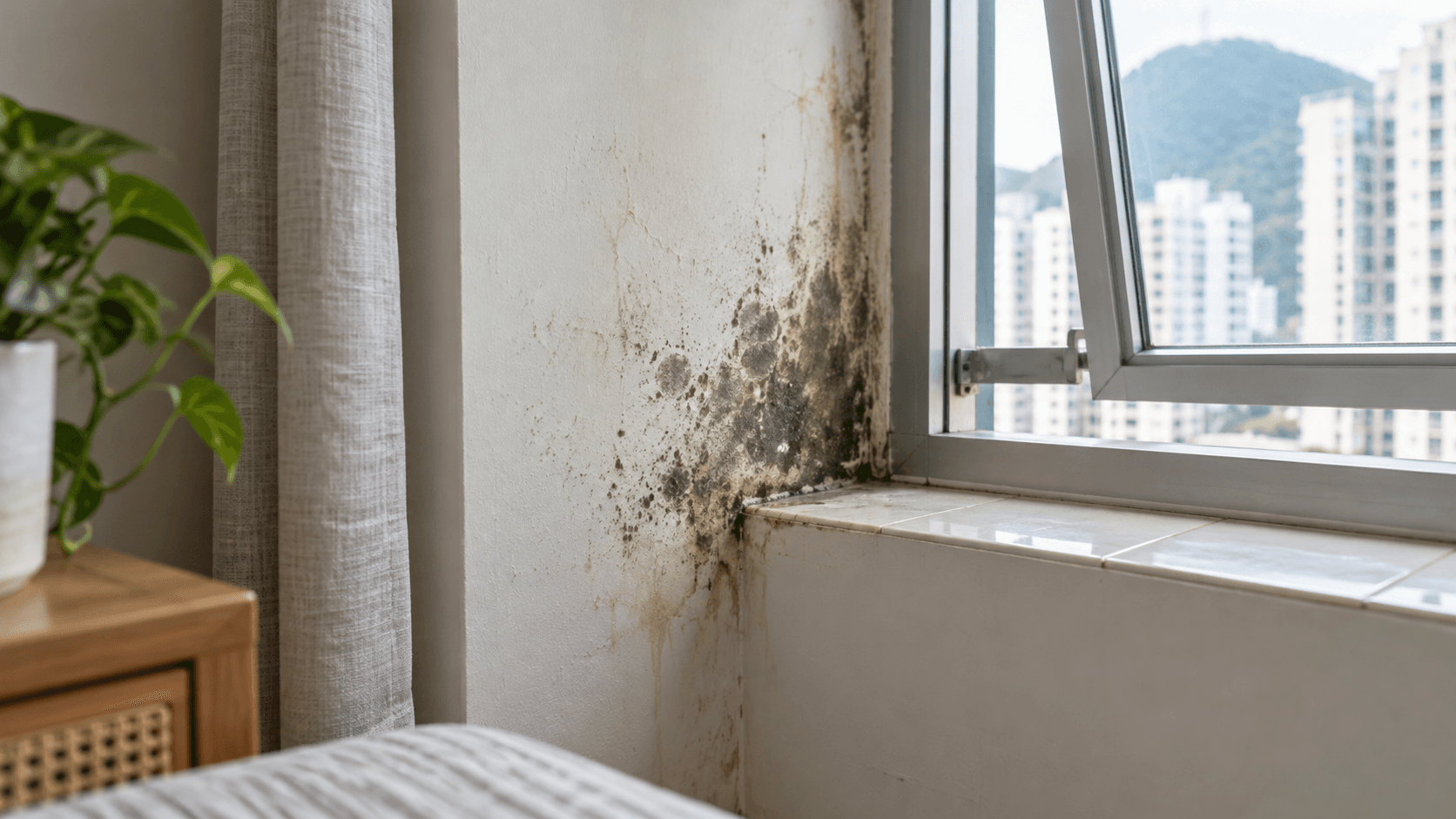
For a new ceiling mark, map its position against the roof area and ask management to arrange investigation by a competent person. Avoid an exposed edge or roof access during heavy rain merely to improve a photograph. If water approaches electrical equipment or loose ceiling material presents a risk, stay clear and notify management promptly. A ceiling patch that has been repainted needs a history of the original water source, repair and follow-up. New paint is a finish, not a waterproofing certificate. The goal of the viewing is to frame a specific investigation rather than to diagnose a whole building from one stain.
Trace each finding to completed work
If management says an outlet was cleared, ask which outlet, on what date, what was found, whether neighbouring outlets were checked and how the result was observed after rain. If the response involves replacing a rainwater pipe or changing a podium surface, ask a building professional to explain the work and applicable procedure. The Buildings Department encourages regular inspection of building drainage. A defective private building drain may call for investigation and repair by a competent contractor; complicated cases or statutory orders can require an authorised person. Residents cannot infer the correct route from appearance alone.
A quotation marked “fix leakage” is too vague for a buyer to evaluate. Request the location, investigation method, proposed scope, protection during work, acceptance method and maintenance handover. If a drainage repair order exists, a lawyer should check how it relates to the building and transaction. No order is not proof that the system works. This roof-rainwater question differs from a slow sink within the flat: it concerns how surface water travels across the roof and enters the common system. Keep those paths separate so the right professional is asked the right question. Source: https://www.bd.gov.hk/en/safety-inspection/building-safety/index_bsi_drainage.html
Confirm use rights and safe access
If a particular flat uses a flat roof, read the deed, building rules and tenancy to establish who cleans the surface, who maintains an outlet and who repairs the structure. Exclusive use does not automatically include permission to cover a rainwater inlet or change the drainage fall. Before placing planters, boxes or renovation materials, check whether they obstruct the water path or access for inspection. A tenant needs a clear reporting contact, a safe and permitted access route and an answer on who will arrange a competent assessment. Record those details at handover.
The Buildings Department’s rainy-season guidance also asks managers to inspect exterior installations and projections. If works are underway on the roof, ask how materials are stored and outlets kept clear during construction. A single cleanup after the project differs from an ongoing maintenance programme. If residents have no roof access, request an inspection by authorised management staff and a written account of the result. Limited access is a reason to seek a verifiable record, not an invitation to enter a restricted area or assume that all is well. Source: https://www.bd.gov.hk/en/resources/codes-and-references/precautionary-measures-typhoon-season/index.html
Recheck before and after heavy weather
Before the rainy season, ask whether management has scheduled roof and podium inspections, debris clearance and known repairs. After significant rain, ask whether pooling, seepage or a new defect was reported. The Buildings Department advises competent persons to inspect and carry out necessary repairs as soon as possible after inclement weather. This does not mean every shower calls for a complete engineering survey. It means new signs should be considered alongside the maintenance history. If the same outlet is repeatedly reported as blocked, ask whether surface clearing alone has addressed the cause.
The Drainage Services Department describes inspection, desilting and repair as preventive maintenance for public stormwater systems, particularly before and during the rainy season. A building roof drain and a street gully have different owners, but the practical sequence is similar: establish whether water can enter the right inlet, clear obstruction and repair damage found through investigation. Clearing a roadside gully does not certify a private roof outlet. A building’s own clearance job is not government approval. Ask each responsible party for evidence about its part of the route. Source: https://www.dsd.gov.hk/EN/Flood_Prevention/Keeping_the_Drainage_System_in_Good_Shape/Preventive_Maintenance/index.html
Compare two hypothetical flats
Imagine two similarly priced top-floor flats. Building A can provide a roof-inspection report, outlet-clearance ticket, photographs after heavy rain and a dated completion note for a repair. Building B says only that “nobody complained this year”, while a ceiling patch has been freshly painted and management cannot identify the outlet serving that roof. These are hypothetical examples, not assessments of current listings. A’s records still need to match the precise roof section and dates. B needs an explanation of the paint, past leaks and present drainage condition. No complaint recorded is not the same thing as no standing water.
If substantial work may fall due after purchase, request the corporation’s scope, funding route and any decision on owners’ contributions. The conveyancing lawyer can address the agreed allocation in the sale. A tenant needs a different handover record: ceiling condition, known past leaks, reporting contact and follow-up of open work. “The landlord will handle it” is an intention, not proof of repair. Name the work, responsible person and date. Finally trace where rain lands, which outlet should carry it away, who inspected it and who authorises repairs. One dry-day viewing cannot promise the next storm will cause no leak, but a coherent record prevents an unresolved problem from being treated as a completed job.
Match every handover document to the real roof
If an inspection report merely says “roof checked”, ask for the level, a zone plan, outlet identifiers or photographs so it can be matched to the area of concern. A flat may have more than one roof level above it, and water may cross another zone before reaching a downpipe. Reconcile the inspection date with photographs and repair tickets. A clearance ticket from years ago cannot explain a new ceiling stain. Present missing parts of the record as specific questions so management can supply the relevant evidence or say that it does not exist.
If a seller undertakes to repair before completion, ask the conveyancing lawyer how to specify the work, completion evidence and follow-up in the transaction. “Deal with seepage” alone is too vague. A tenant can mark existing stains, photographs and the landlord’s response in the key-handover record, making later changes easier to identify. If no storm occurs before handover, acknowledge that rainy-day performance has not been observed and preserve the reporting route. A sunny visit is not a waterproofing test; an unsupported fear is not an investigation either.

