
Buying a first hand parking space: what should the sales brochure tell you?
For a parking space sold under the Lands Department Consent Scheme, match the brochure plan to the exact numbered space, then read the DMC summary, land grant restrictions and preliminary agreement terms. Plan dimensions do not prove that your car can enter and park comfortably.
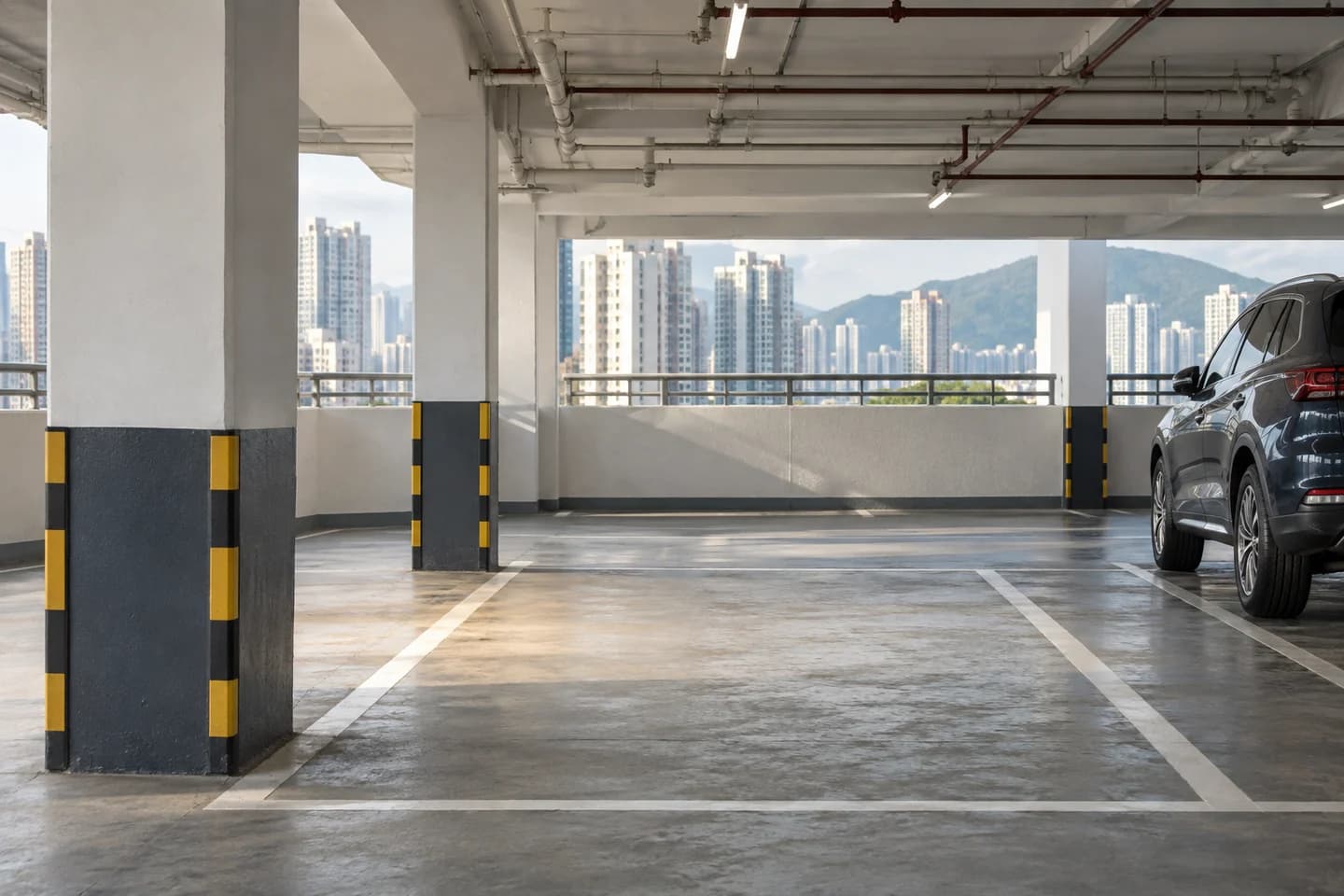
Identify the exact numbered space and scheme
Two spaces in the same car park can have similar numbers but different columns, turns or ramp approaches. Obtain the sales brochure for parking space for the relevant development, record its version and find your proposed space on every applicable plan. Under the Lands Department conditions for parking spaces sold through its Consent Scheme, brochure floor plans must show the location, number, dimensions and area of each parking space. Match the number on the plan to the number in the proposed transaction documents. A general car-park illustration or a salesperson's description of a standard bay is insufficient for this task.
First establish whether the sale is governed by these Consent Scheme conditions. The particular brochure and preliminary-agreement requirements discussed here arise in that setting. A completed or resale space may be sold under different documents, although the practical need to check its plan, government lease, deed of mutual covenant and contract remains. Ask your solicitor to identify the governing documents for the actual transaction. Do not assume that the residential sales brochure for a flat is the parking-space brochure, or that a marketing plan carries the same required details.
Compare plan dimensions with actual access
The stated dimensions and area help rule out an obviously unsuitable option, but they do not by themselves show how easily a car can reverse past a column, wall, angled corner or neighbouring vehicle. If access is possible, take your vehicle's external dimensions and inspect the route from the car-park entrance to the bay. Observe the turning approach, ramp, overhead clearance, columns and walking route. Follow the property's viewing arrangements and avoid treating a quick glance from the entrance as a complete test. Where construction is incomplete, ask for the details that can be checked on the plan and mark actual manoeuvring as unverified.
Use the same comparison fields for each candidate: number, plan dimensions, stated area, distance to the lift, nearby obstacles and whether a physical visit was possible. Total area cannot be converted automatically into door-opening clearance; shape and obstructions matter. A larger bay may still be awkward if its entry angle is poor. If advertising mentions electric-vehicle charging, separately verify the supply, access rights and charges. A conduit, reserved space or stated possibility of later installation does not establish a usable charger today.
Read the DMC summary as a cost question
The relevant Consent Scheme conditions require the brochure to summarise specified deed of mutual covenant matters: the undivided shares assigned to each parking space, the basis for sharing management expenses among space owners, and the basis for fixing the management-fee deposit. Read these together. The purchase price is paid once, while management charges and possible contributions to common maintenance can affect the long-term holding cost. The summary identifies questions; your solicitor should compare it with the complete DMC, draft DMC and sale documents that apply to the development.
Imagine two spaces with the same asking price, one nearer the lift. Convenience alone is an incomplete comparison. Put each space's management charge, deposit and allocation basis next to the price. If no current management-charge amount is available, label it unresolved rather than estimating it from the residential flat's charge. The basis for any future contribution to maintenance of slopes or shared facilities also depends on the project's actual documents. Figures or allocation rules from another estate cannot safely be imported into this one.
Test your plans against land grant restrictions
Whether a space can be sold separately, who may buy it, and whether it can be let to an outside driver cannot be inferred from the phrase private car parking space. Under the relevant conditions, the brochure must summarise the government lease term, restrictions on alienation of parking spaces if any, and lease conditions onerous to a purchaser. Write down your intended use: personal parking, letting, sale with a flat or separate resale. Ask your solicitor to test each plan against the actual land grant, DMC and transaction terms before you assume it is available.
Restrictions can arise from more than one document and can address different stages of ownership. Lands Department explains that a DMC regulates rights and obligations between co-owners and the manager. An apparently silent lease summary is therefore no reason to skip the DMC. Contract terms may also restrict what a buyer can do after signing but before completion. If a sales explanation sounds more generous than a document, request a written clarification and professional review. Treat a missing answer as an open buying condition rather than a benefit already secured.
Understand deposit, formal contract and default
For the parking-space Consent Scheme conditions reviewed here, the brochure must summarise specified preliminary agreement provisions: a preliminary deposit of 5% of the price on signing, its holding by a firm of solicitors acting for the vendor as stakeholder, and the stated consequences if the purchaser does not execute the formal agreement within 5 working days after entering the preliminary agreement. These are conditions in the cited sale framework; read the actual current transaction papers before acting. Ask not only how much to pay, but when, to whom, and what document must be signed next.
If financing, legal advice or another proposed joint purchaser has not been settled, put those dependencies against the signing timetable. The brochure conditions also call for information recommending a separate firm of solicitors for the purchaser. If the vendor's firm acts for both sides and a conflict appears, separate representation may later be needed and total fees may be higher. Discuss that choice with your legal adviser before signing. A parking transaction can create binding obligations even if its asset seems simpler than a flat.
Worked comparison: same price, different answer
Suppose spaces A and B have the same price and similar stated area. A has a column beside it but a direct approach from the entrance; B has no adjacent column but sits beyond a tight turn. Match both numbers and measurements on the brochure plan. If a visit is possible, assess the approach with the intended vehicle. If neither bay has been built, identify which clearance and turning questions cannot yet be observed. Next compare management cost allocation, lease restrictions and the dates when money and documents are due. This reveals why easier parking and easier eventual resale are separate questions.
If you expect to let the space, ask your solicitor to confirm any restriction first. If you need charging, verify actual connection and access terms with the relevant management or service provider. Record a promised future facility as a promise with its condition, not as an installed service. Only then compare the purchase prices. This example assumes no lender approval, charger installation right or automatic permission to let; those answers depend on the particular space and documents.
Use the brochure period to check the version
Under the relevant Lands Department Consent conditions, the parking-space brochure must be prepared in English and Chinese, state its printing date, and be available for free public collection for at least 7 days immediately before a sale or offer of a space. It must also be available at the sale place on the sale date and on the development website for inspection at the same time. That period gives a buyer a chance to read plans and terms before arriving at a sales venue. If all you have is a price sheet on the day, request the complete current parking brochure and confirm that it covers the numbered spaces being offered.
Send the key pages to anyone buying with you and to your solicitor: plan, DMC summary, lease restrictions, deposit provision and signing timetable. Record the printing date if you found an older copy online, then request the current version instead of combining an old plan with a new price. The required brochure information also includes the period for which the vendor must make good defects in the space. Ask how a defect is recorded on delivery, whom to notify and how the sale agreement states that obligation. These Consent Scheme provisions do not describe every resale parking transaction.
Keep a document trail before committing
Retain the brochure version, the plan page for your chosen bay, price and payment papers, relevant DMC and land grant provisions, any viewing notes, and written responses to unresolved questions. If the brochure is updated, check whether the number, dimensions or sale terms changed. A phone screenshot of the asking price is a poor substitute for the full source document. For an unbuilt space, write down the route and clearance matters you have not been able to check, and put them to the seller and your adviser.
Once identity, use, continuing cost and completion timing all agree, you can make a reasoned purchase decision. Houseline can help you compare locations and property options; the actual parking space's dimensions and legal rights still need to be established through the development's documents and appropriate professional advice. The point of this order is practical: it prevents a crowded sales session from reducing a long-term decision to a single headline price.