
Flat facing a car park entrance: test the ramp, exhaust and route
Map the vehicle ramp and ventilation outlet separately, observe peak use, test the actual rooms and footpath, then ask management for evidence on any fault.
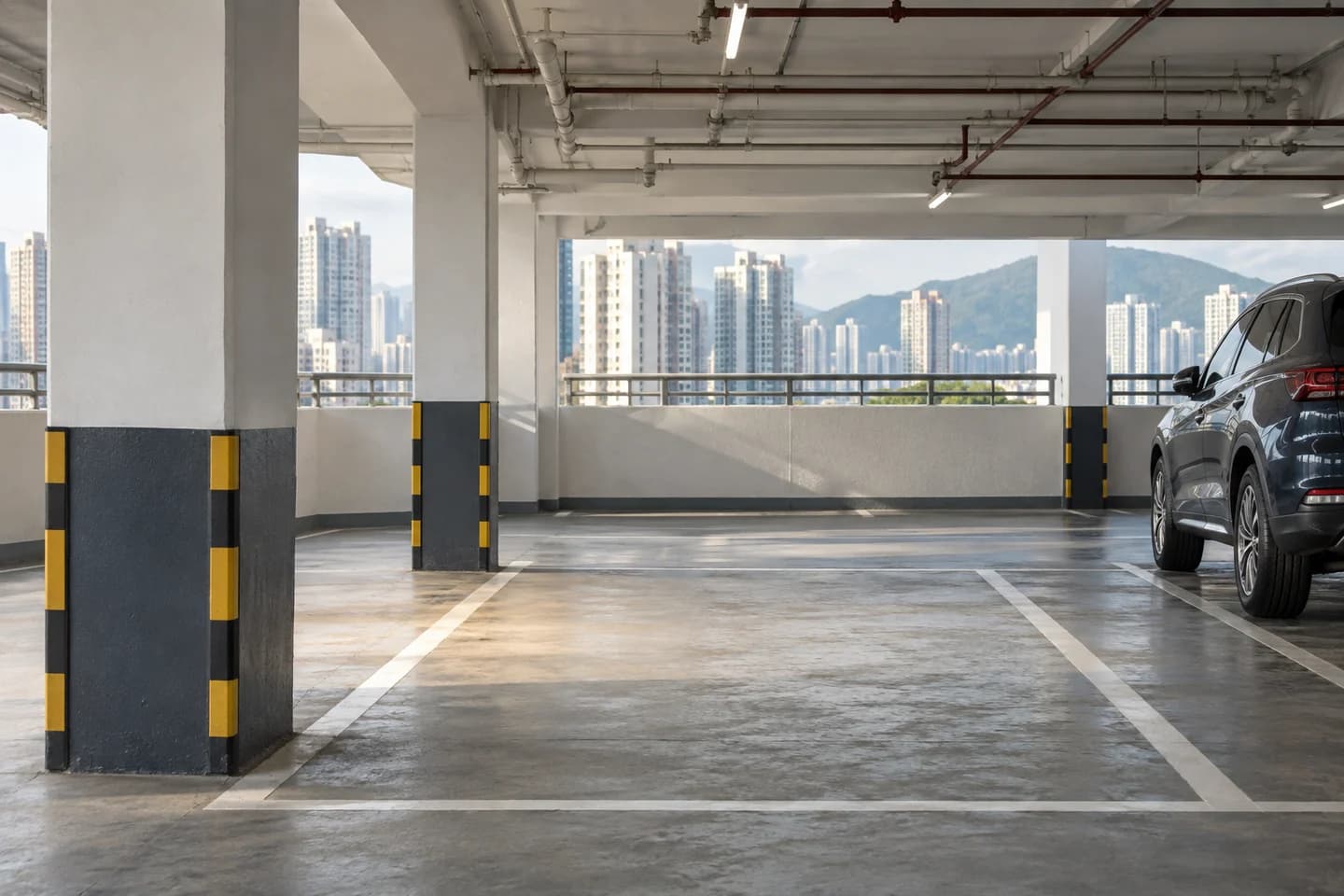
Do not let a car park label stand in for a room test
The relevant question is not simply whether a residential tower has parking. It is whether the particular flat and its daily walking route are exposed to a ramp, queue, ventilation outlet or a combination of them. Sketch where the vehicles enter and leave, where the flat's bedroom and living-room windows face, and how residents reach their entrance. A ramp beneath one side of a podium can affect an opening there while a flat at the same height on another side feels different. Ask management whether the opening you see is a vehicle entry, an exhaust outlet, an intake, or merely a grille serving another room. Visual resemblance is not proof of a system's purpose. Do this map before you visit at peak times; otherwise you may spend the whole viewing beside the wrong opening. Your decision should rest on what the household can actually observe and what management can document for this building.
See vehicles when the ramp is active
Arrange a visit when parking movements are likely to be noticeable for the particular building, then remain long enough to see more than a single vehicle. A residential car park may have a different rhythm from one serving shops or deliveries, and a timed visit is more useful than guessing from the number of painted spaces. Note whether cars queue inside or outside the ramp, whether a gate alarm or tyre contact makes a repeatable sound, and whether idling occurs beside a residential window. Do not stand in the vehicle path, and do not enter a controlled car park without permission. From the flat, listen in the rooms you would use with windows in your normal positions. If the ramp is quiet during the visit, record that narrow observation rather than writing “no traffic noise.” Ask whether there are different weekday, weekend or late service patterns before settling a purchase or a long rental.
Locate the ventilation outlet, not just the car park
EPD's practice note on car-park air pollution says exhaust should be discharged to the atmosphere in a place and manner that does not cause nuisance to people in the building, nearby buildings or the public. It also discusses ventilation design for vehicle emissions and attention to blocked openings. This provides a useful question for management: which outlet serves the car park, what area does it face, and has a recurring odour or fan problem been investigated? The note concerns car-park design and operation; it does not give a prospective resident an indoor air reading for a flat. A smell at a window can have several sources, and the absence of a smell on one visit is limited evidence. If a particular outlet is close to the bedroom, ask for the ventilation layout or a competent explanation rather than declaring the arrangement compliant or defective from the street.
Separate ramp noise from plant noise and ordinary road noise
A car leaving a gate, a ventilation fan and road traffic outside the site may sound similar through a closed window but involve different operators and remedies. EPD describes road traffic and commercial or industrial plant as different sources of environmental noise. If a steady hum continues while no vehicles move, ask management whether a fan or another service operates there. If the short peaks match the barrier opening, note the times and ask about gate maintenance. If the loudest sound is from public-road vehicles, a car-park manager may have little control over it. Do not assume a legal noise complaint will make an unsuitable bedroom suitable. A useful viewing log names the room, window position, time, likely event and effect on conversation or rest. That description is more actionable than an unsupported decibel estimate from a phone app.
Walk the entrance as a pedestrian
The route deserves its own test, especially for a child, an older resident or anyone carrying shopping. Trace the line from pavement to lobby without cutting through the ramp. Look for a clear separation between the footpath and vehicles, a usable crossing point, sightlines around any wall or pillar, and a safe place to wait if a gate opens. Observe rather than invent a right of way: road markings and building rules at the actual site matter. Ask management how residents and deliveries are meant to enter and whether the arrangement changes when the car park is busy. If the household uses a wheelchair or pram, do the route at normal pace and note steps or steep sections that a floor plan omits. A flat can have acceptable room sound yet still fail the household's entrance needs. Conversely, a busy ramp may be manageable if pedestrians have a genuinely separate route.
Ask for records that match the concern
If you observe fumes, a persistent fan sound or repeated gate malfunction, describe the event to management and ask what system they inspected, when and with what result. EPD's practice note makes ventilation and maintenance pertinent, but it does not mean a buyer is entitled to every operating log; request what management can reasonably provide or explain. Ask about the operator if the car park belongs to a different commercial part of a mixed-use development. An agent saying that “the car park is maintained” is not equivalent to an answer about the particular outlet facing a bedroom. For a tenant, ask the landlord who will raise future building complaints and how quickly a known defect is to be followed up. For a buyer, have material common-part or service-right questions checked through the transaction's document process. Keep a dated written record of each answer.
Work through a hypothetical comparison
Imagine two similarly priced homes beside separate car parks. At Flat A, vehicles use a ramp below the living room, but the bedrooms face a courtyard, pedestrians have a separate entrance, and a visit during the household's return time shows no queue outside. At Flat B, the floor is higher, yet the main bedroom faces an identified exhaust outlet and the only walking route crosses the vehicle approach. Height alone would give the wrong answer. The household may prefer A after checking other times and management documents, while asking for a specific explanation or deciding against B. This example has no claimed live price, measurement or building assessment. It shows how to compare the same fields: affected room, ramp activity, outlet position, pedestrian route and the quality of the reply. A household that works from home may weight daytime fan noise more heavily than one absent during the day.
Compare the burden of keeping the windows shut
If a bedroom is acceptable only with the window closed, ask what that means for the household throughout ordinary use. Test the room with any existing cooling or mechanical ventilation in the condition the landlord or seller will actually hand over, and check whether the person who sleeps there can use it comfortably. Do not promise that a new window, film or purifier will remove vehicle noise or exhaust; each product addresses a different problem and may require permission or installation work. If the current occupant reports a past fan or gate repair, request the dated outcome and repeat the visit while the system operates. Keep purchase and running decisions separate: the flat's price might be attractive, but recurring cooling use, an unsolved smell or a pedestrian detour can impose a daily cost that a simple asking-price comparison misses. You need not invent a dollar figure. State the daily compromise in plain terms and ask whether the family would still choose the flat after a normal working week. If that answer depends on a repair, identify precisely who can authorise and verify it before treating the home as suitable.
Decide what can be accepted before signing
Write the decision threshold in terms that can be tested. You might require a sleep room that works with the window as you normally use it, a pedestrian route that does not rely on the vehicle ramp, and a documented answer to an observed exhaust concern. Revisit during the most relevant time rather than accepting a promise that traffic is “usually quiet.” If a material defect is acknowledged, ask who controls the repair and what evidence of completion you will receive; have any transaction condition handled by the appropriate adviser. EPD provides a pollution reporting route for an actual incident, but a future complaint cannot replace a pre-commitment home decision. If the unresolved condition exceeds your threshold, compare another home through Houseline and repeat the same room, outlet and route checks. Keep uncertainty visible rather than converting it into a confident claim of safety or danger.