
Mechanical parking bay: check the system and access before committing
A mechanical bay needs more than a vehicle-fit check. Identify whether it is a regulated mechanized system or a qualifying double-deck stacker, inspect the relevant upkeep evidence, test the actual vehicle and learn what happens when retrieval stops.
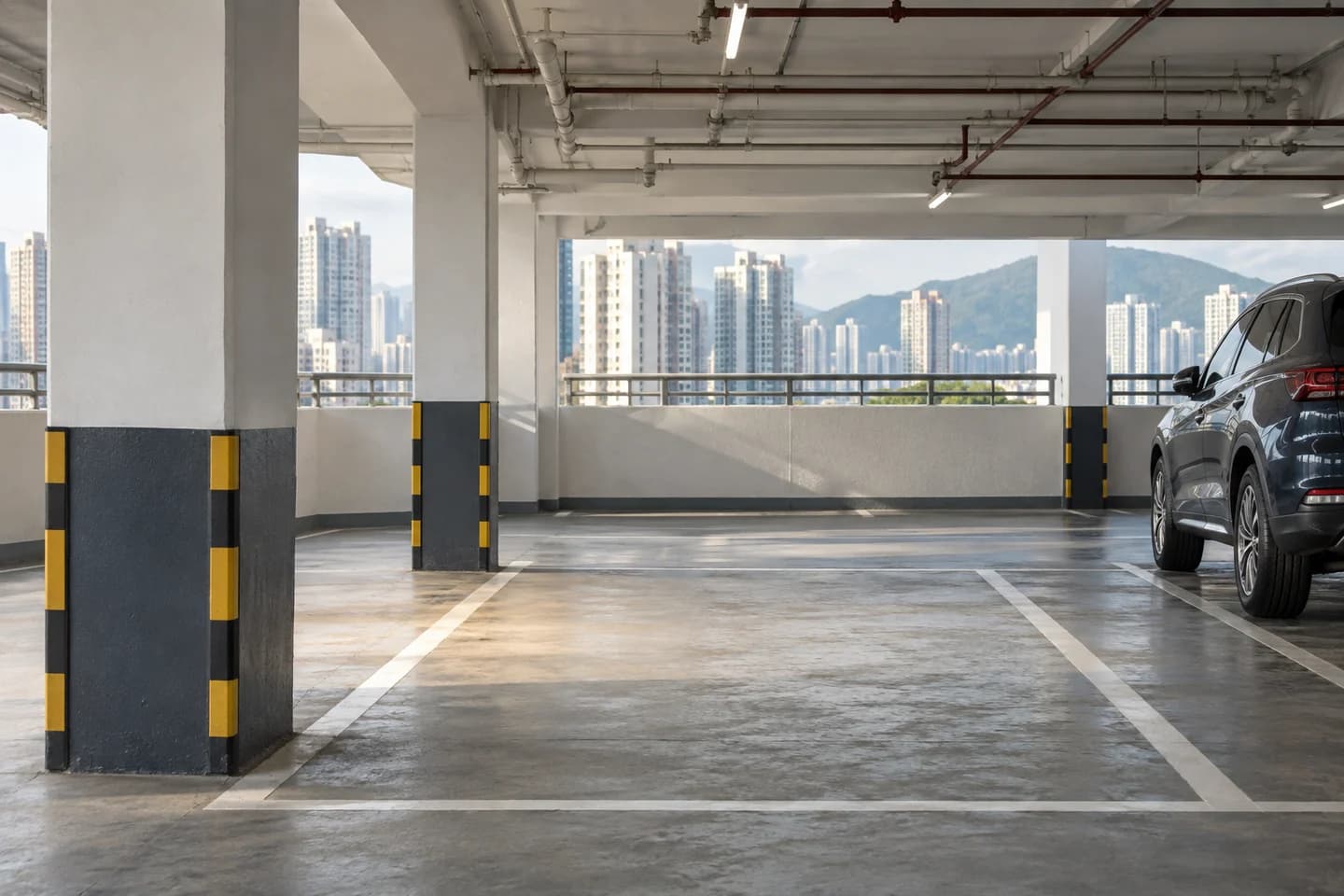
Identify the machine before judging the bay
A listing that says 'mechanical parking' might mean an upper platform that can only descend once the lower car moves, or an automated plant that carries vehicles to multiple storage positions. These are materially different ways of accessing a car. Ask for the precise bay number, system model, operator instructions and the right being offered under the rental or sale documents. Visit the position rather than relying on a flat parking plan. Your first decision is whether you can retrieve the car when you actually need it, not just whether a rectangle on a plan is large enough.
The Electrical and Mechanical Services Department treats mechanized vehicle parking systems as lifts under the Lifts and Escalators Ordinance. It also identifies a limited exclusion for a lift used solely to raise vehicles where travel does not exceed 3.5 metres and does not pass through any floor; EMSD has separate guidance for such double-deck car parks. Do not assume every stacker needs the same lift permit, or that an automated parking tower falls under the small double-deck exception. Record the equipment and ask management which regime applies to that exact installation before asking for documents.
Match upkeep evidence to the system type
For a regulated mechanized system, EMSD guidance says a valid use permit should be conspicuously displayed at the main landing before the plant is used. Its responsible person must arrange maintenance by a registered lift contractor at intervals not exceeding a month and examination by a registered lift engineer at intervals not exceeding a year, with other examinations after commissioning or major alteration. Read the permit for the actual installation and ask how recent maintenance, examination and planned outages are recorded. A photograph of another machine's permit does not answer the question. If the equipment is stopped, ask whether a separate section can still return your car.
The limited double-deck stacker exception follows a different safety guide; demanding a lift use permit for excluded equipment would confuse the decision. EMSD says owners and facility managers are responsible for proper upkeep. The guide calls for maintenance at manufacturer-recommended intervals by a competent provider and annual examination and safety certification by a suitable registered professional engineer. Ask for relevant installation, structural and examination records, particularly when purchasing. A renter should ask how an unavailable platform affects the promised use. 'It has always worked' is not the same as a dated examination or an agreed remedy.
Test the actual car, not a generic vehicle
Mechanical equipment adds limits that a painted bay may not have: platform load, maximum length, width and height, wheelbase and the approach into the transfer area. EMSD's double-deck guide calls for notices in Chinese and English stating the safe working load and maximum allowable vehicle size. Bring the measurements and weight for the car you drive, including a roof box or other regular accessory. Then see whether mirrors, door opening and the driver's route work in practice. Being one small margin inside a posted maximum is not an answer if a turn or an entrance cannot be negotiated safely.
Ask an authorised operator or management representative to demonstrate a full deposit and retrieval under the local procedure. Note where occupants leave the car, how it is positioned, whether the lower bay has to be vacant, and who controls the key or remote. EMSD says a double-deck platform must not lift people or a vehicle with people inside, and an upper platform must not be lowered while the lower deck is occupied. If a demonstration conflicts with those precautions, stop and clarify it with management. Do not press emergency controls yourself to see whether they work; the question is how the responsible operator handles an abnormal event.
Ask what retrieval looks like during an outage
Equipment may be maintained, examined, repaired or affected by a power interruption. Ask who receives a fault report after hours, who is authorised to operate an emergency procedure, whether a car already inside can be retrieved, and how users learn when service resumes. EMSD notes that examination and repair can suspend a mechanized plant and that subdivision can reduce the impact of a complete shutdown. You need not judge the engineering design yourself, but you do need to know how its operation affects your own bay. Do not turn a normal retrieval demonstration into a promise of uninterrupted access.
A double-deck bay creates a more particular dependency: the upper car may be unable to descend until the lower car is removed. Ask how the lower driver is contacted, whether there are stated retrieval hours, and what management does if the vehicle cannot be moved promptly. Someone who drives to work at a fixed early hour may find this unacceptable; a weekend driver might make a different decision. Neither should assume management will supply a replacement bay unless the agreement says so. Make the practical consequence explicit before you compare advertised monthly rent or purchase price.
Work through two realistic decisions
Suppose one driver must leave at a fixed time each morning to collect a family member. Their car meets every posted size and load limit for an upper double-deck space, but the lower space is occupied at the relevant hour and management has no clear retrieval rule. The issue is not whether the machine can raise the car. The driver should seek a workable written procedure or another bay, because the use pattern is a poor fit. That conclusion does not claim the plant is defective; it identifies a service constraint that matters to this household.
Now consider a weekend driver offered a bay in a regulated automated system. The manager produces the permit for that machine, recent maintenance and examination evidence, and a supervised demonstration. The driver's roof box, however, makes the normal car configuration exceed the plant's posted height. An invitation to 'try it once' is not a solution. If removing the box permanently is practical, check the car again in its actual regular configuration; otherwise decline the bay. Both cases show why evidence about the machine, vehicle and retrieval routine belongs on one decision sheet before price enters the discussion.
Put usable access into the agreement
For a rental, write down the actual bay and deck, the access credential, permitted hours, operating rules, any equipment charge and the notification and remedy if the plant cannot be used. For a purchase, have the solicitor identify the exact interest being transferred, relevant management documents and continuing equipment costs. Rights in a mechanical installation need not be identical to what a buyer imagines from a conventional painted space. Without the deed and management terms, no one can safely promise that a particular owner, manager or user will bear every future replacement cost.
At handover, follow the agreed procedure with your own car and record the bay identifier, posted limits, control method and result of both parking and retrieval. If the plant is out of service, retain the manager's notice and follow the written arrangement; do not interfere with the machinery. A lower rent is useful only if the hours, access reliability and extra charges suit you. A buyer must also consider long-term upkeep and how the bay could later be transferred or let. A cheap headline price does not answer whether the parking right is usable when the driver needs it.
Make the final site decision
Before leaving the car park, record answers to five linked questions: which regulatory category applies, do documents match this installation, does your car meet every posted limit, has a complete supervised operation been shown, and what happens during a fault or planned shutdown? Mark an answer that consists only of 'should be fine' as unresolved. This is not a request for a buyer to certify an engineering plant; it is a request for the seller or operator to supply the evidence and operating facts needed for a practical decision. Check the agreement again after the visit so verbal assurances are not lost.
If no safe demonstration is available, arrange one with suitable personnel instead of trying the controls yourself. If the equipment category remains unclear, ask management or EMSD which published requirements apply to that installation. Obtain qualified help for a technical defect. A mechanical system can create useful parking capacity in a tight building, but the product the driver is actually choosing is a bay that can be accessed under known rules. Confirm that service first; then compare it with conventional parking on the same basis of cost, access and maintenance exposure.