
Will a private parking space flood? Check the bay and the response plan
Trace the route to the exact bay, examine building drainage and incident records, and ask how management warns drivers before heavy rain makes access unsafe.
Define the exposure of the exact space
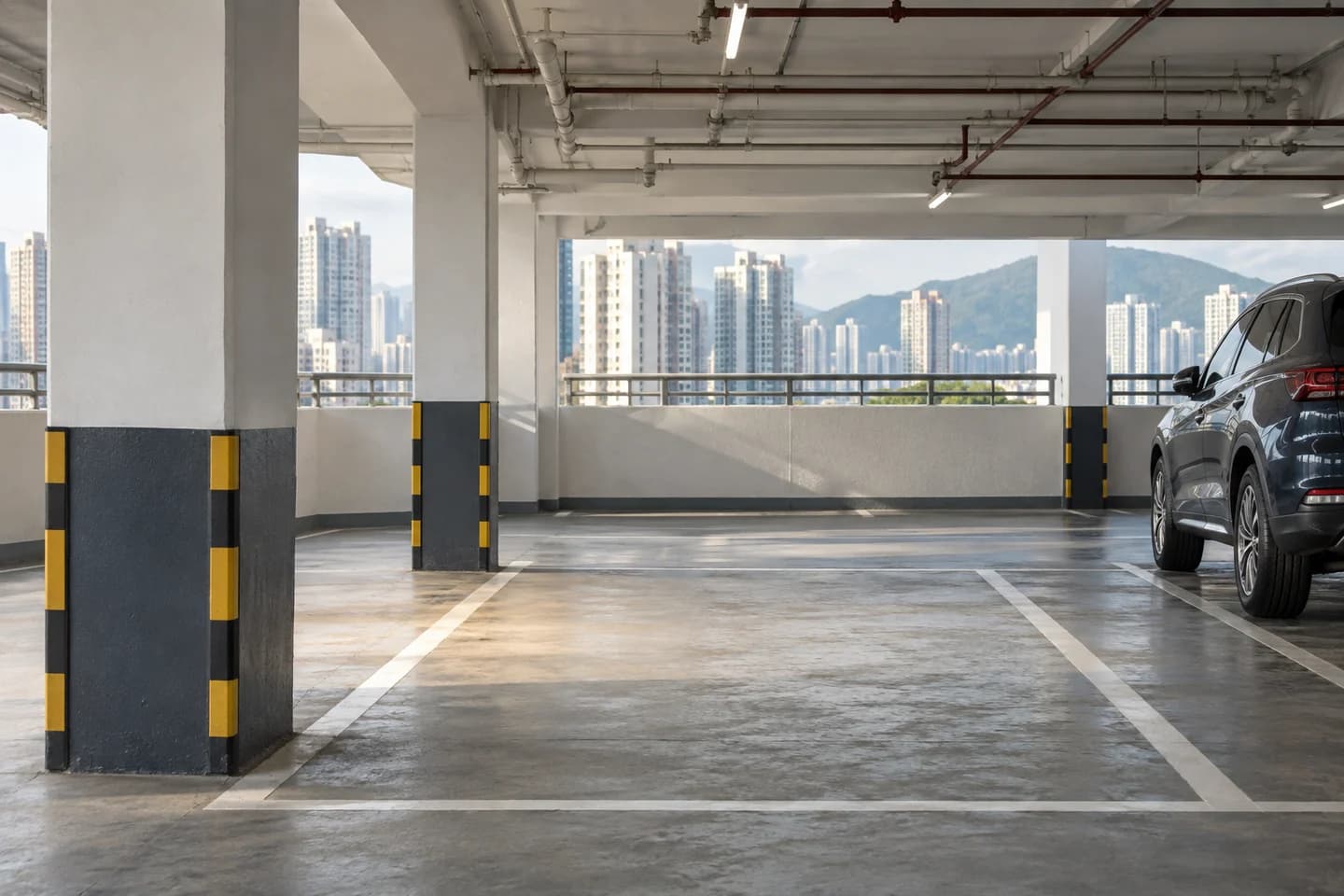
A parking space does not have a useful single “flood rating” that a viewing can reveal. Identify the numbered bay, its level, the ramp, gate, pedestrian exit and road you must use. Water can block the entrance before it reaches the car, or gather at a low point within the garage. Equally, a bay on a higher level does not guarantee a usable route through a flooded street. Your decision is whether the bay and access fit your driving routine and whether the building has a verifiable response to heavy rain.
Walk the complete route in safe ordinary weather. Notice where the ramp bottoms out, where rainwater is meant to enter drains, and whether an adjacent road or entrance slopes toward the garage. Do not lift covers or enter a plant room. Record what is visible and what only the manager can establish. A dry-day visit gives you a map of possible pathways, not a record of how a previous storm behaved. Keep this physical question separate from ownership rights and insurance terms, which answer different problems.
Separate drainage, barriers and pumping
The Drainage Services Department identifies basements, including car parks, as places generally susceptible to flooding. Its advice includes keeping drains clear, checking flood protection and pumping equipment, and preparing an emergency plan. The Buildings Department asks owners and property managers to inspect basement drains and rainwater manholes and provide suitable pumping where flood risk exists. These are public recommendations. They do not prove that the garage you are considering has working equipment.
Ask management where water can enter, where the drainage route leads, and what happens when the first measure fails. A grate at a ramp foot could be blocked; a pump label does not show that its operation and backup have been tested. Request dated inspection or servicing information and any unresolved faults. A driver can observe and ask, but equipment status belongs with building management or a suitable technical person. If management will not explain the basic arrangement, treat that as an information gap rather than silently assuming compliance.
Use area data for context, not a certificate
Check the Drainage Services Department’s list of flood-prone areas for nearby locations prone to blockage, ongoing drainage works, or coastal low-lying and windy exposure. The list supports community preparedness; it is not a safety certificate for a particular tower, ramp or bay. An address outside a listed area can still experience local blockage or rainfall. An address near a listed area does not establish that your exact bay has flooded.
DSD explains that its older flooding blackspots system focused on large-scale drainage improvement planning and that recent incidents can arise for other reasons, including blocked inlets and local systems. Read the public location information alongside the building’s own history and physical layout. If the vicinity is listed, ask how the entrance is protected. If it is not listed, still ask what happens at the garage’s low point. Do not turn a map category into an unsupported estimate of damage probability, resale value or insurance cost.
Request an incident-to-repair history
Ask whether the bay, ramp, gate, pedestrian route or plant rooms have suffered pooling or flooding. For a past event, seek the date, affected location, investigation, work performed and subsequent recheck. The manager may not share private vehicle claims, but should be able to address the management of common facilities. A statement that “last time was fine” offers limited evidence because rainfall, tide, blocked drains and power supply can differ between events.
When viewing older photographs or notices, verify the garage, level and date. Water at a street entrance is not proof that every bay was submerged; a photograph of an upper deck does not clear a lower one. Ask what was changed after the event and whether a recurring problem remains. Speak to users if practical, but treat informal accounts as leads for specific questions. The useful record is a chain from observed problem through the repair and test, not a dramatic image detached from its location.
Find out how early warnings become action
Ask who inspects drains, stop boards and pumps before severe weather; how drivers are notified; when the entrance might close; and whether any safe alternative parking arrangement exists. DSD recommends wet-season drain clearing, equipment checks and contingency plans. Ask which of those measures this particular garage uses and whether a dated notice or operating procedure supports the answer. A general government recommendation is not a promise from a building manager.
The Observatory warns that Red and Black Rainstorm signals can bring serious road flooding, and advises people to remain in safe places under a Black signal and avoid flooded areas. A plan that requires an owner to rush down into a flooded basement after conditions have become dangerous is not useful. Ask how much can be done earlier, who decides that the route is safe, and what happens if a car cannot be moved safely. No car is worth crossing floodwater or entering a hazardous garage.
Compare two plausible bays
Imagine Bay A is in a basement near the ramp foot. The rent is attractive and management has a recent drain-cleaning record, but it cannot explain where a stop board is stored or whether a previous pooling incident was resolved. Bay B is on a covered upper deck. It has a documented warning and temporary gate-closure procedure, yet the only road to the garage has been affected by flooding. It would be misleading to call B safe solely because it is higher, or to call A safe solely because the grate was cleaned.
Make three rows in your decision notes: bay, building entrance and public approach. For each, record a previous event if known, protection, notification and remaining uncertainty. An equipment test could make A more attractive; a reliable alternative route could improve B. Neither is a guaranteed outcome. The illustration uses no claimed water depth or loss figure. Your use pattern matters: a household that depends on daily car access may place more weight on route interruptions than an occasional driver. Compare the answer with your actual need before paying a deposit.
Read the contract and insurance separately
Check that the purchase or rental papers identify the exact bay, usage limits and the treatment of a temporary closure. If flood works are planned, ask when they are expected to finish, whether they have been commissioned, and what access will be available during the work. Read your motor policy for the actual flood cover, excess, reporting deadline and restrictions; policies vary. Do not assume that a label such as comprehensive insurance pays every water-damage claim.
Insurance can address some financial consequences but cannot reopen an unsafe ramp. Likewise, a pump is a physical measure but does not settle a contractual dispute about loss of access. Keep these questions in separate columns. If management cannot answer a material risk question, request the information before committing or choose another space. The purpose is a decision grounded in the exact bay and building response rather than the appearance of a dry garage on one visit.
Keep the plan useful after handover
Once you have access, register for the manager’s actual notification channel and keep the relevant contact details. Know how you will check the garage status before driving in heavy rain, and where a safe alternative could be if the entrance closes. In normal, safe conditions, note whether new storage or debris obstructs an inlet and report it. Leave operation of communal pumps and barriers to authorised people.
After a storm, stay clear of damaged electrical equipment and unsafe water. Record any new mark or failure with its time and precise location, then compare the management response with the stated plan. This follow-up matters because flood exposure changes when drains clog, works start or traffic routes change. A good precommitment check becomes a practical operating plan, not a one-time assurance that no future flood is possible.