
Home living and property articles

Moving out: how to carry rechargeable batteries and fluorescent lamps for recycling
Tape exposed terminals on household portable rechargeable batteries. Keep fluorescent tubes and compact fluorescent lamps in protective packaging, away from heavier moving boxes. Carry the two categories separately and check an EPD collection point; disposable, lead acid and vehicle batteries need another route.
Moving in and renovation · Read the article
Too few sockets in a flat: what needs a fixed outlet, and when is an extension unsafe?
Give plug-connected high power appliances such as air conditioners and kettles a fixed outlet each. Use an extension only where suitable; do not stack units or use one with loose contacts, damage or exposure to damp. If socket shortage is permanent, ask a registered electrical contractor to assess the fixed installation.
Home and living · Read the articleAir conditioner dripping: is the fault in your unit or the communal drain?
Record when and where water falls, then have the air conditioner, drain hose and connection checked. If a shared condensate pipe may be involved, ask management and owners to inspect it. Recheck after repair; FEHD investigates dripping that may amount to a hygiene nuisance.
Home and living · Read the articleWhere to take unwanted furniture when moving out
Reusable furniture can be offered to someone who agrees to take it. Disused household furniture can be taken to an FEHD off-street public refuse collection point; check the building handover, the point’s address and hours, and keep renovation waste on its separate route.
Moving in and renovation · Read the articleBuying a first-hand flat with pets: inspect the DMC before signing
Inspect the development’s Deed of Mutual Covenant (DMC), or its latest draft, at the sales office before signing. Find the pet provisions for the development and confirm how they apply to the intended flat; sales talk or pet-themed marketing is not a substitute.
New developments · Read the articleHow to verify an estate agent before a viewing or payment
Check the individual and business on the Estate Agents Authority Licence List, compare the person with an estate agent card, and confirm their affiliation through the agency. Hold back documents and money until the identity is clear.
Buying · Read the articleReconnecting a gas appliance after a move: who does the work and what do you keep?
Connection, disconnection or testing of a gas cooker or water heater is gas installation work. Arrange a registered gas installer with the appropriate class through a registered gas contractor. Check and keep the completed work record before using the appliance.
Moving in and renovation · Read the article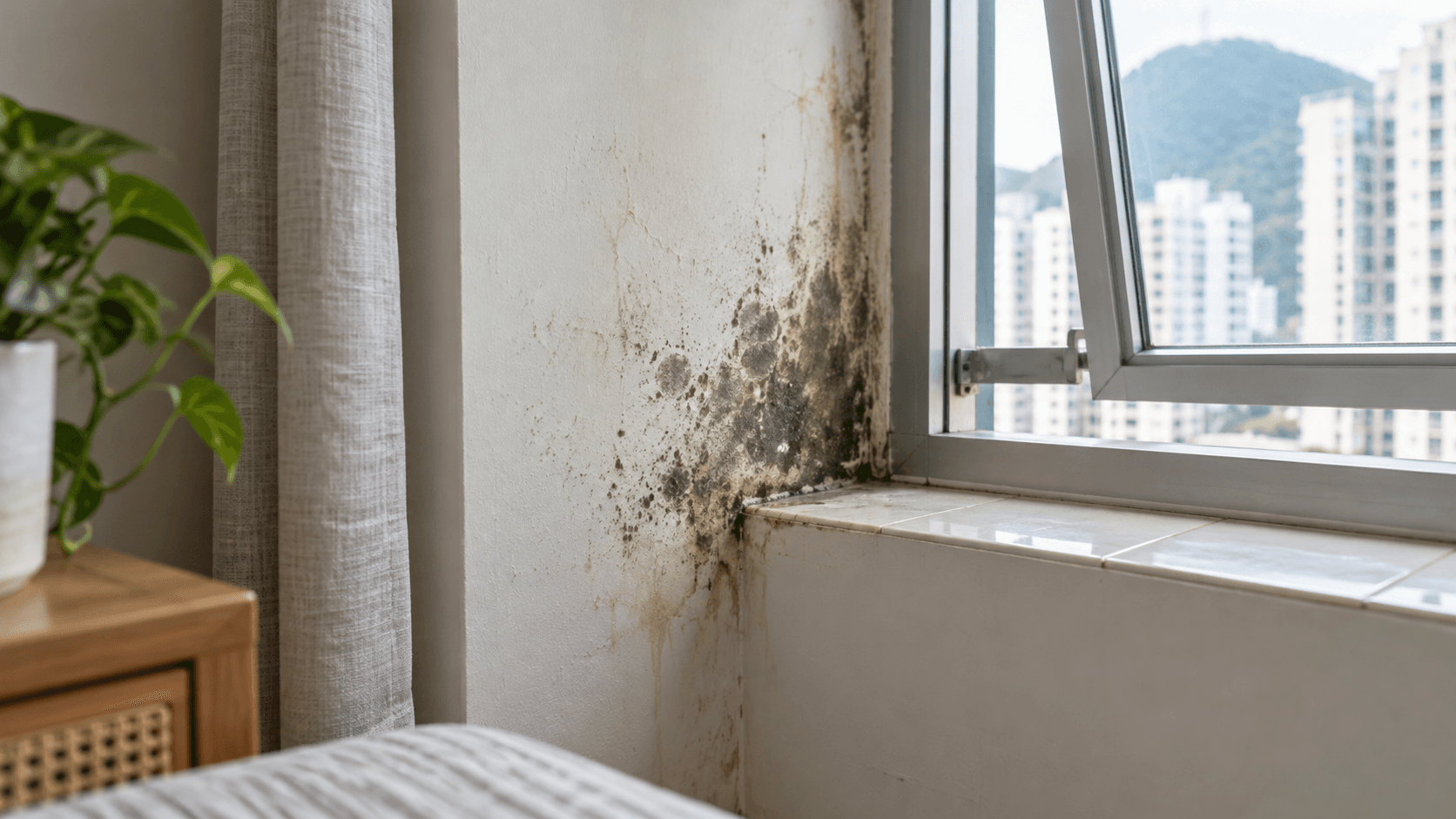
Mould at home: control the moisture, then clean and ventilate
When mould appears, look for leaks or trapped moisture, keep the area dry and improve ventilation. Then clean or discard affected material as appropriate. Covering the stain without addressing dampness leaves the cause in place.
Home and living · Read the articleBefore a rental viewing, what should a tenant check on Form 6?
Form 6 appoints the estate agent; it is separate from the tenancy. Before signing, check each property, the appointment dates, whom the agent represents, your commission and when it becomes payable. Take the signed copy immediately.
Renting · Read the articlePlan a fire escape route and check detectors after moving in
After moving in, walk from the flat door to a safe staircase and outside, agree a household meeting place, and keep corridors and smoke doors clear. Check whether the flat has a stand-alone fire detector and test it as instructed. If it has none, use Fire Services Department guidance to choose, position and maintain one.
Home and living · Read the articleCheck Form 4 before viewing a second-hand flat
Before a licensed agent arranges a buyer’s inspection of a Hong Kong residential flat, the agent must explain and sign Form 4 with the buyer. Check the start and end dates, each property entry in Schedule 1, the agency role and commissions on both sides, and the payment conditions in Schedule 3. Take a signed copy immediately.
Buying · Read the articleFlushing drinking-water taps after moving in or replumbing
For a newly occupied flat or one where replumbing has just finished, run drinking-water taps every morning and night for about 15 minutes during the first 3 days. During that period, run the tap for at least 2 minutes each time before taking water for drinking or cooking. Report sediment that remains after successive days of flushing to the building’s registered agent or management office.
Moving in and renovation · Read the article