
What should you check when buying or renting a village house? Title, unauthorised works and access
Village houses offer more space and lower density, but the type of title, unauthorised building works, access and mortgage arrangements all differ from an ordinary flat. Before buying or renting, check the title to the house, whether there are unauthorised building works, and whether you have the right to use the access road and the parking space.
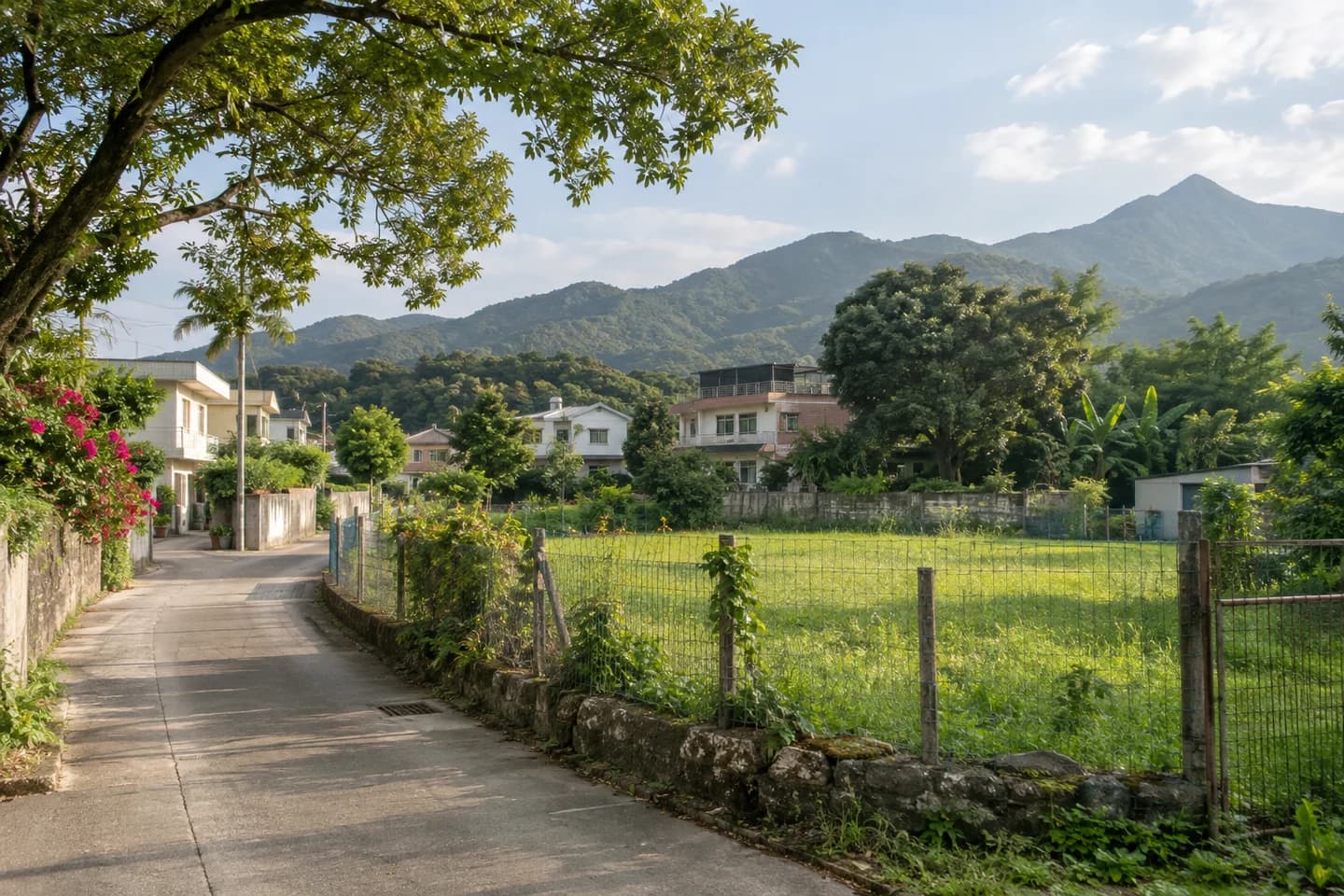
Basic specifications of a village house
A New Territories Exempted House generally has no more than three storeys, is no higher than 8.23 metres and has a roofed-over area of no more than 65.03 square metres (about 700 square feet) per floor. Each floor is commonly sold separately, with the ground floor usually including the garden and the top floor usually including the roof. Some village houses are sold as a whole house.
Title and restrictions on transfer
The land under a village house may be ancestral agricultural land held as an old schedule lot, or land granted by the Government by private treaty. A small house built under the Small House Policy may carry a restriction on transfer, and a premium must be paid to the Government before it can be transferred to someone who is not an indigenous villager.
Have a solicitor check the terms of the land lease, whether the restriction on transfer has been removed, and whether the house has obtained a certificate of compliance.
Unauthorised building works
Common unauthorised works in village houses include rooftop structures, enclosed balconies, added canopies and ground-floor extensions. A bank may refuse a mortgage on a property with unauthorised works or lower the loan-to-value ratio, and the owner may receive a removal order.
At the viewing, compare the house with the approved plans, and ask the owner whether any order has been received from the Buildings Department.
Access, parking and services
The road to a village house may cross private land, so confirm that there is a right of way. The parking space in front of the house does not necessarily belong to it, and may be rented from another owner in the village.
- Confirm how sewage is handled: a public sewer or a septic tank.
- Find out about telecommunications network coverage and the internet options.
- Visit again on a rainy day and at night to see the flooding and lighting conditions.
- Work out the actual time to the nearest MTR station or bus stop.
Common questions
Can you get a mortgage on a village house?
Yes, but banks are more cautious in approving mortgages on village houses. The loan-to-value ratio and the term depend on the title, the age of the house, the location and whether there are unauthorised works. Ask banks about the valuation and mortgage terms before you sign.
What is the difference between a small house and a village house?
Village house is a general term for low-rise houses in the rural New Territories. A small house is one kind: a house that an indigenous villager applied to build under the Small House Policy. Its transfer may be restricted and require payment of a premium.
Who owns the roof and garden of a village house?
It depends on the title documents. Where a village house is sold floor by floor, the ownership of, or right to use, the roof and garden is set out in the deeds. Have a solicitor check before you buy or sell.